
If you are here for the discount then use use my use my referral link or just type J Ewbank into the referred by box
In short
- Verdict: Yes, recommended them. Solid build, easy to clean in dishwasher, performs well after months of daily use.
- Price paid: £165 for a 4-piece set with the referral discount (RRP £195). It’s worth adding the 14cm saucepan and 22cm frying pan to the set for versatility.
- Best for: Anyone wanting tri-ply stainless steel without feeling shafted by Le Creuset prices or handles falling off John Lewis Thermacore pans.
- Watch out for: Hot sides take some adjusting to. Lids fit slightly loose but it’s not an issue in practice.
- Get 15% off: use my referral link, or just type J Ewbank into the “Referred by a friend” field at checkout.
It is a follow up to which pans I purchased and why https://johnewbank.co.uk/what-stainless-steel-pans-should-i-buy-which-pans-i-purchased-and-why/.
I used my friend’s referral link when buying these, which I felt made them more reasonably priced. Taking the cost down from £195 for three saucepans and a frying pan to £165.
Build Quality
The pans are very shiny and feel well made. They have a robustness to them that suggests they will last. For comparison, I also bought a set of M&S tri-ply pans from Vinted and sent them back (as they had scratches and were sold as new). The M&S pans felt flimsy; not hugely flimsy, but they didn’t seem robust enough for £90. These ProCook pans are noticeably sturdier.
They have the feel that if you could use them as a cricket bat and they wouldn’t get damaged.
Update 14/04/2026: I have been using these pans now for a few months and the build quality seems just as good as when I bought them.
Lids and Fit
The lids don’t fit quite as I expected, and seem ever so slightly too small for the pan. However, they don’t vibrate when the pot is boiling, which is a plus. If the pan does boil over, liquid tends to run down the side of the pot shown in the video, there is no vent in these, so you just have to keep an eye on them.
I quite like that the lids are glass, it lets you see in, lots of other reviewers on various sites have pointed out that lids mist up therefore they are pointless, having used these for a reasonable amount of time I don’t agree.
Update 14/04/2026: I haven’t actually found the lids not fitting perfectly to be an issue, steam tends to escape well, so if the pans are boiling there is no rattling.
Heating and Cooking
I previously used aluminium pans with a non-stick coating, which heated up very quickly. These stainless steel pans take a little longer to heat up, but not substantially so. But once they are hot they tend to hold their heat for a long time. Which is good and bad.
One thing I wasn’t expecting: the sides of the pans get very hot, much hotter than my previous pans. If you’re sautéing something in a saucepan food and oil can splash up the sides, because they are tri-ply and spread the heat well, the food can dry out and form a crust rapidly. It’s not necessarily a problem, just different.
Despite food occasionally burning onto the sides, I’ve had no issues cleaning them. Everything comes off easily, burnt bits and all. This includes burnt on food, which has happened a few times.
The even distribution of heat is noticeable. When I cook bacon in the frying pan, it cooks at the same speed across the whole surface. No hot spots.
Update 14/04/2026: The sides of the pans being hot has become less of an issue over time, to the point that I don’t notice it or have issue with food burning onto the sides anymore. That might be because I have adjusted my cooking style.
Weight
The pans are noticeably weightier than my previous aluminium pans. For the saucepans, I don’t find this annoying; if anything, it feels reassuring. My girlfriend has no issues with their weight, so they aren’t ridiculous. The 20cm saucepan has a helper handle, which is useful if making stock or pasta.
Update 14/04/2026: My girlfriend needs the helper handle for the larger 20cm saucepan, she notices them being heavier in general, but likes them regardless.
She thinks that the 14cm saucepan (purchased more recently) is very cute and good for portion control.
Preheating and Oil
With stainless steel, you need to heat the pan before adding oil, and then add food once the oil is hot. This is different from non-stick where you can be more casual. It hasn’t changed my cooking habits significantly; it’s just something to be aware of if you’re coming from coated pans.
The John Lewis Thermacore Wok
I also purchased a five-ply wok from John Lewis, from their Thermacore range. This wok is great for cooking and I’d highly recommend a wok. However, the handle is a weak point. It’s quite stumpy and square with rounded corners, which makes it relatively difficult to lift and control, especially when the wok is full. This is mostly because the Wok is a heavy beast.
The handle digs into your hands when lifting. The ProCook handles, by contrast, distribute the weight comfortably, as the handles are rounded.
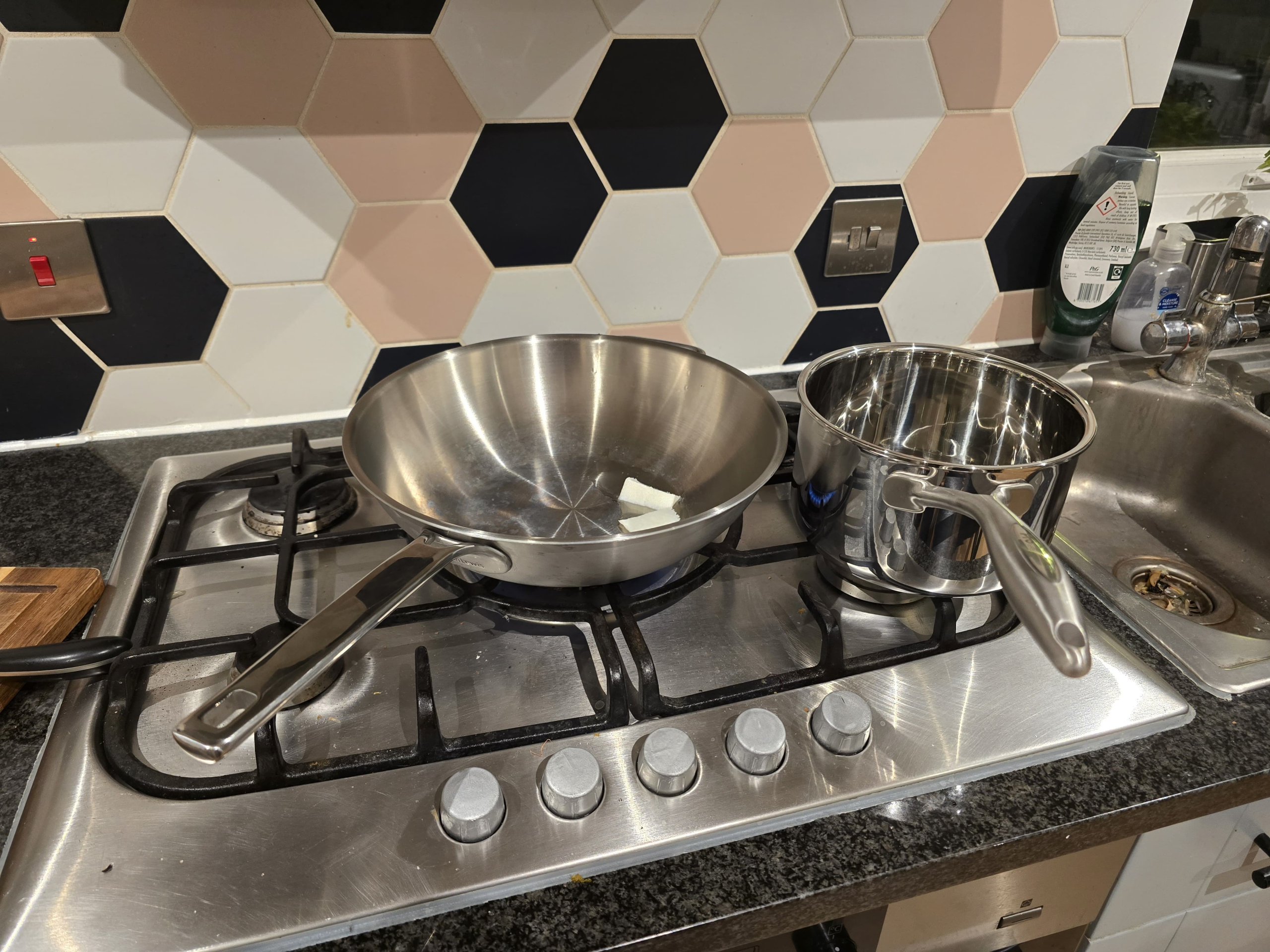
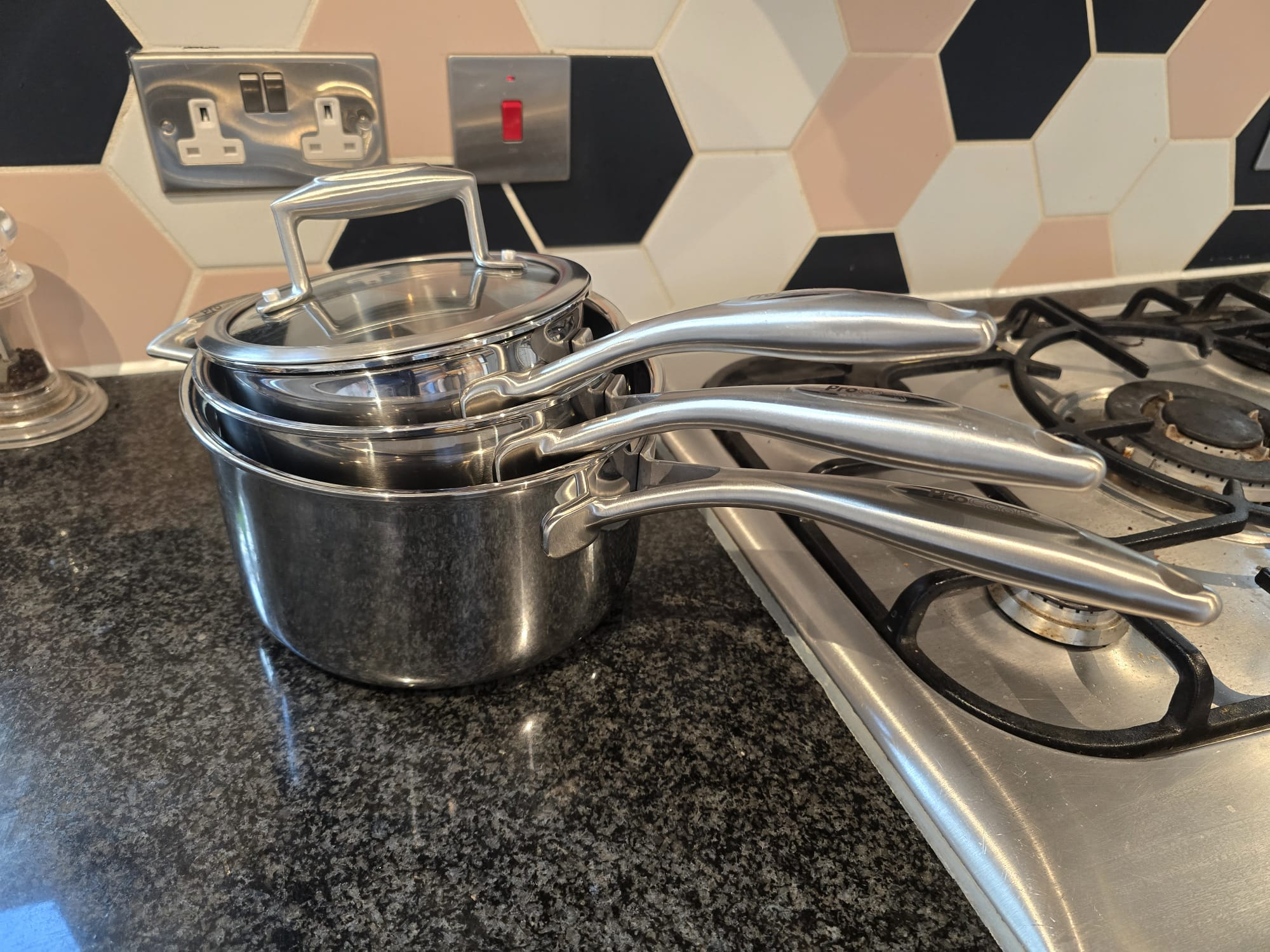
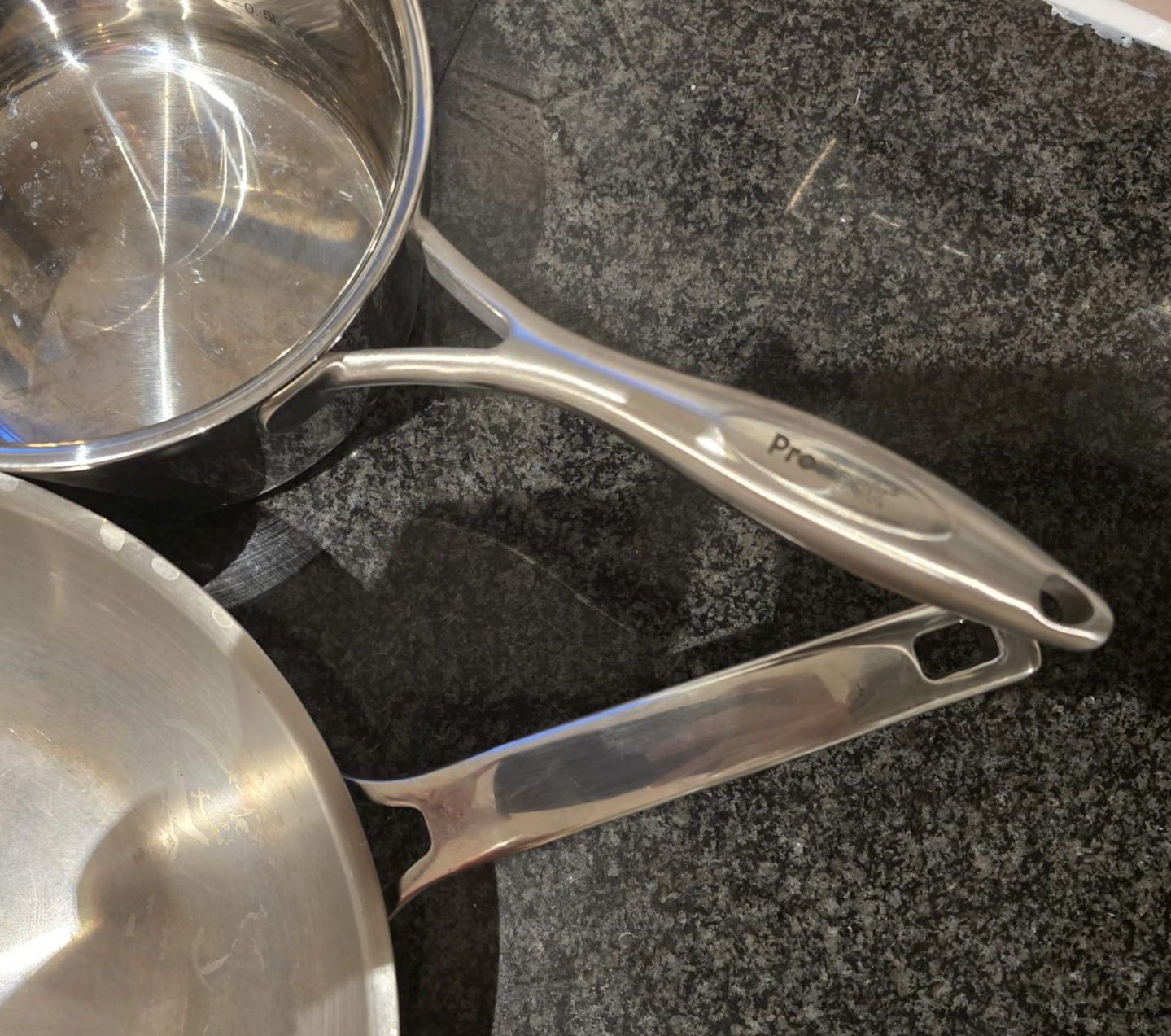
This is in contrast to the ProCook pans, which have arching round handles that are very comfortable to lift. The ProCook handles also allow the pans to stack well, as you can see in the picture.
For clarity: I didn’t entirely dismiss the John Lewis Thermacore range for Saucepans. I just decided I wasn’t going to pay £175 for three saucepans, even if they did look fancy. Having now used both brands, I feel my decision was correct. Fundamentally, I want pans that are comfortable to use, not just ones that look good on a shelf. The ProCook handles deliver on that.
Update 14/04/2026: I’m glad I didn’t go for the Thermacore pans, it looks like they have an issue with handles falling off. Mine hasn’t fallen off on my Wok, and the Wok is still excellent, but I think the Procook pans are likely more robust.
Why I chose the Procook Elite Tri-Ply, and not the Elite Tri-Ply Signature.
Procook has two tri-ply ranges that are similarly priced. The normal Elite and the Elite Signature, shown below.
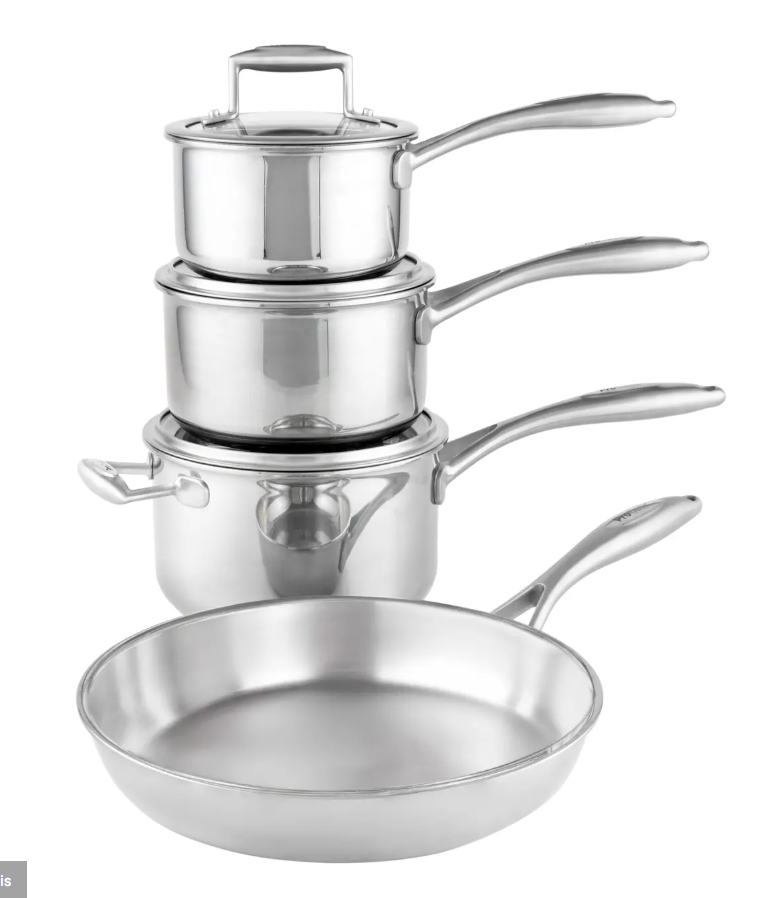
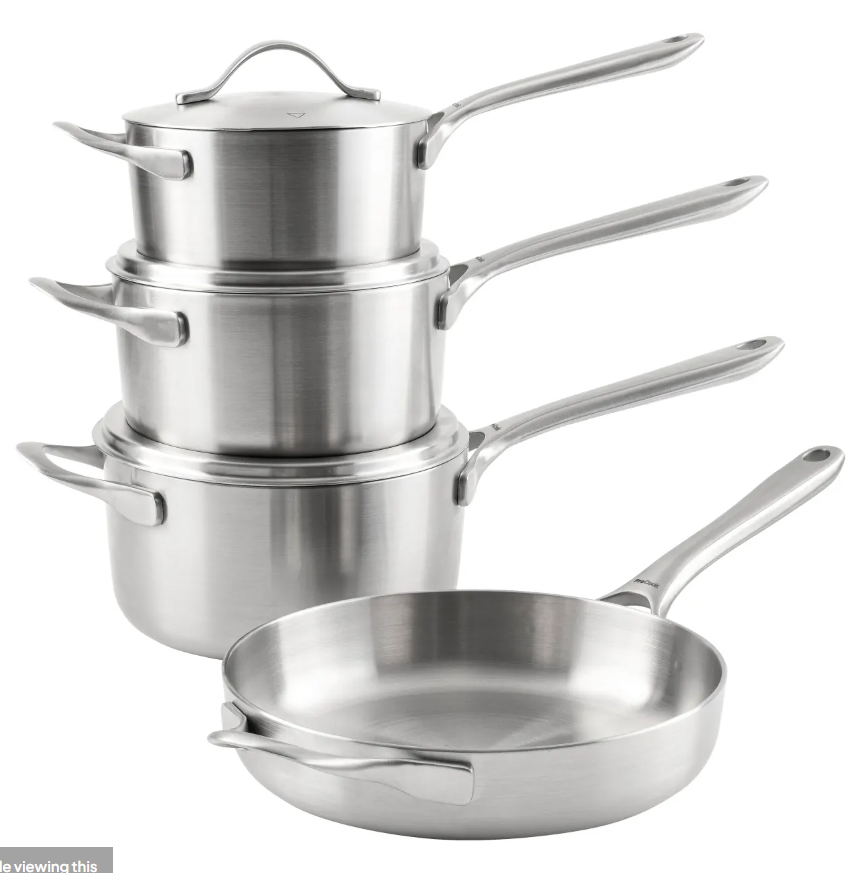
I prefer the brushed stainless steel of the Signature range; however, the Elite Signature are noticeably shorter in stature, and therefore have less internal volume. I thought long and hard about sacrificing aesthetics for practicality, and choose the Elite Tri-ply set, as at the time I wanted more internal volume. In hindsight, I think I over thought this and could have just got a 24cm stockpot in addition to the 20cm saucepan.
Additionally, I was concerned that the stainless steel helper handles on the smaller saucepans of the Signature range might prevent them from stacking as well.
| Feature | ProCook Elite Tri-Ply Signature | ProCook Elite Tri-Ply |
|---|---|---|
| 16cm Saucepan & Lid | Internal: 16cm/6.3in x 8.5cm/3.3in Capacity: 1.5L |
Internal: 16cm/6.5in x 9.5cm/3.5in Capacity: 1.9L |
| 18cm Saucepan & Lid | Internal: 18cm/7.1in x 9.5cm/3.7in Capacity: 2.2L |
Internal: 18cm/7in x 11cm/4.5in Capacity: 2.8L |
| 20cm Saucepan & Lid | Internal: 20cm/7.9in x 10.5cm/4.1in Capacity: 3L |
Internal: 20cm/8in x 12cm/5in Capacity: 3.7L |
| Frying Pan | 24cm/9.4in x 5cm/2in | 26cm/10in x 4.5cm/2in |
What I Have and What I’d Change
Initially I had:
- 16cm, 18cm, and 20cm saucepans and a 28cm frying pan from ProCook Elite Tri-Ply range
- 30cm wok from John Lewis
With regard to the John Lewis pan, I received a voucher which is why I got that. It is a nice pan, but it is very heavy for a Wok especially with the angular handle. Does a wok really need to be tri-ply, I don’t know… I thought about getting a carbon steel wok, but decided against it for now. I think I would be tempted to get the Procook Wok if I was buying again and looking for a Wok as it has a nicer curved handle.
After a few months I found myself wanting a small saucepan a lot for things like rice. I also added the 22cm frying pan as I wanted something smaller to cook eggs and smaller things in. Finally, I bought a 24cm shallow casserole for things like meatballs and currys.
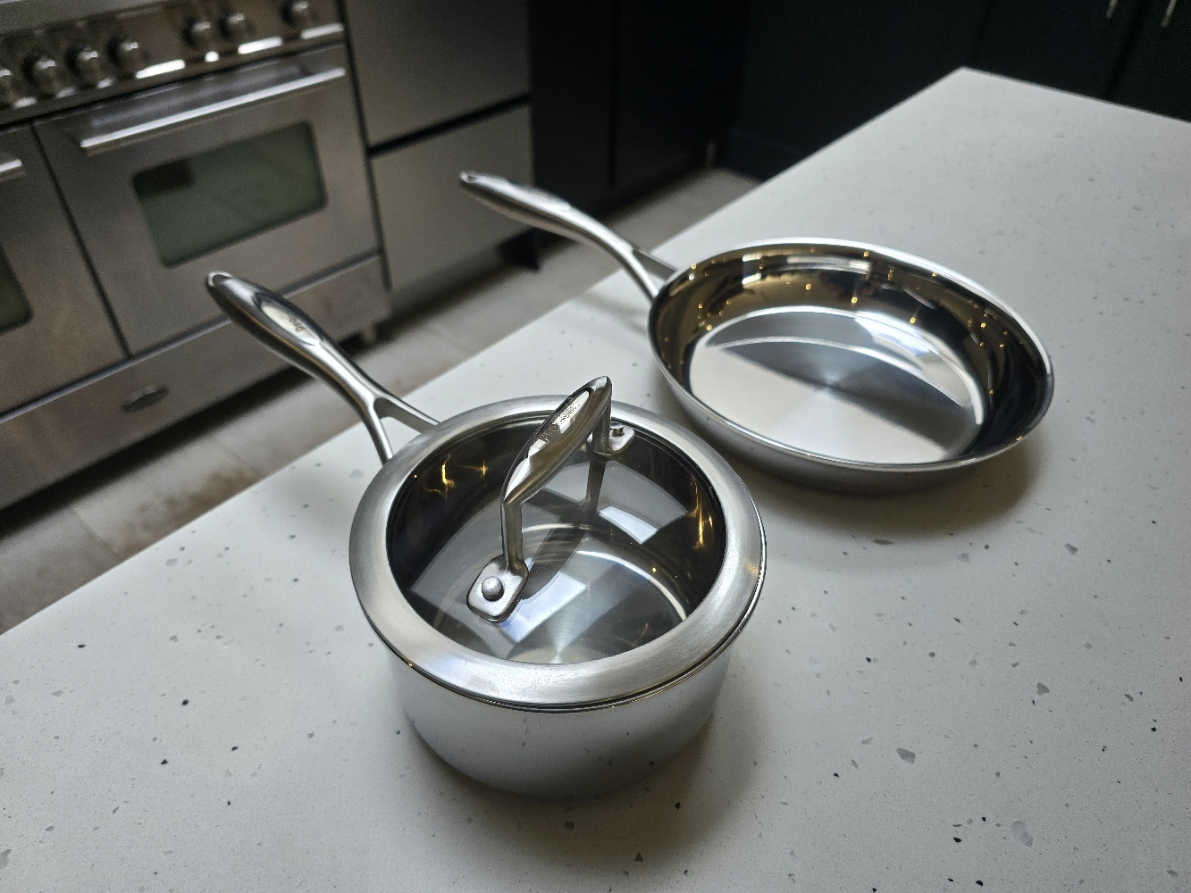
What I’ve Learned
I think saucepans are great, and useful. The Procook pans have grown on me and I don’t regret my purchase. Initially, I was a bit unsure. I would say that but sauciers (chefs/Saute pans) may have been a better purchase, perhaps I just need some separately. Saucepans are essentially pots: good for boiling things and stirring a bit. Sauciers (chefs pans) have curved, flared sides that allow for more even stirring and make it easier to reach food at the edges.
Update 14/04/2026: I no longer feel as strongly about sauciers, I will get one or two but the saucepans are performing well enough for my needs.
Would I Recommend These Pans?
Yes, the ProCook pans feel robust, they seem like they will last, and they clean easily. If you’re looking for a solid starting point, that is 3mm thick tri-ply and doesn’t cost the earth then I think they are a good choice.
You can probably get the similar results from a normal encapsulated-base saucepan for boiling and simmering. Where tri-ply makes sense is for frying pans, where even heat distribution makes more of a difference.
Update 14/04/2026: I am now pretty pleased with my purchase, given how well the pans perform and how much I use them I think it was worth the price.
Thickness of Tri-ply
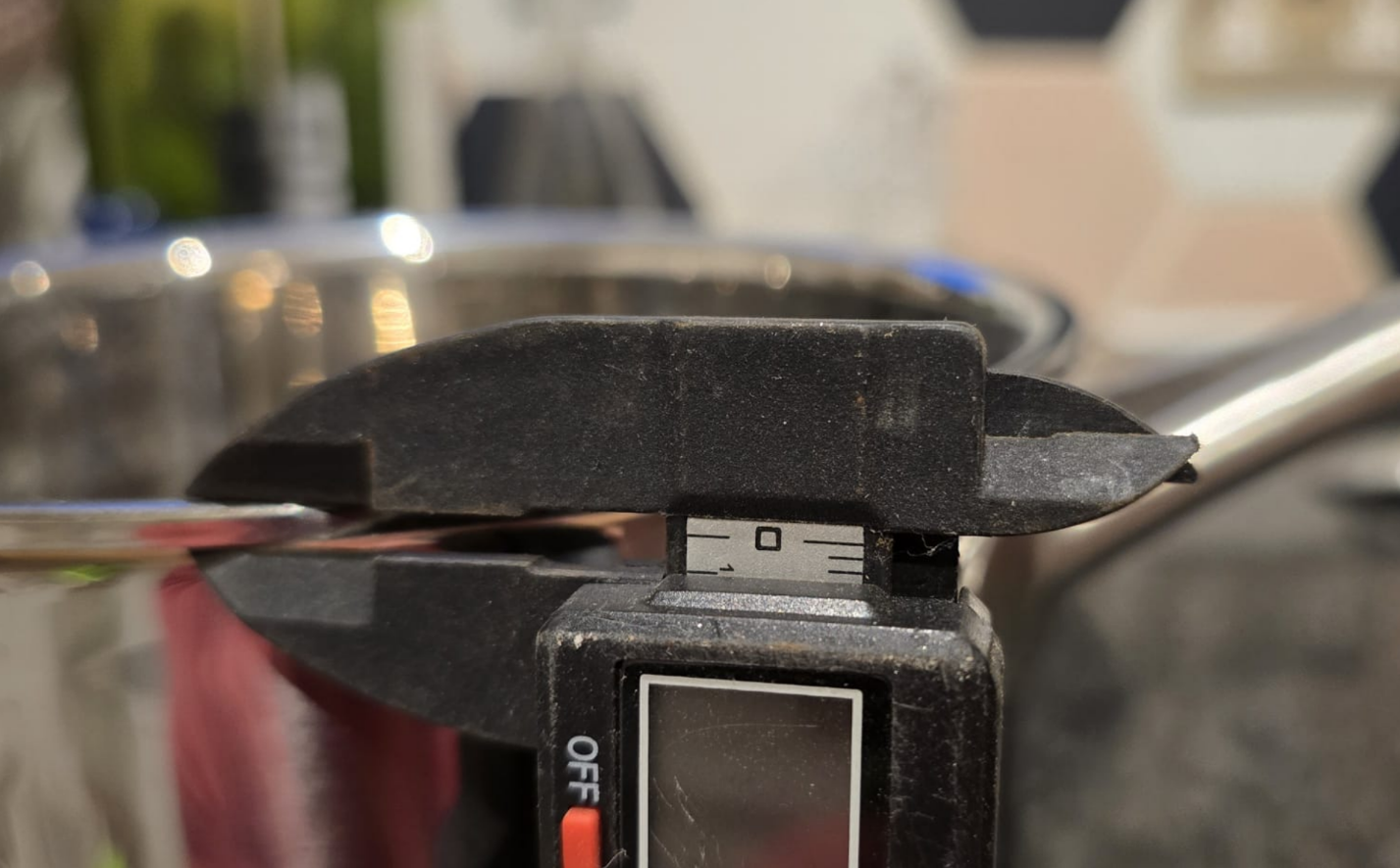
Procook Elite as you can see it is around 3mm, my battery for the digital display has ran out. I will get a new one and post the updated image.
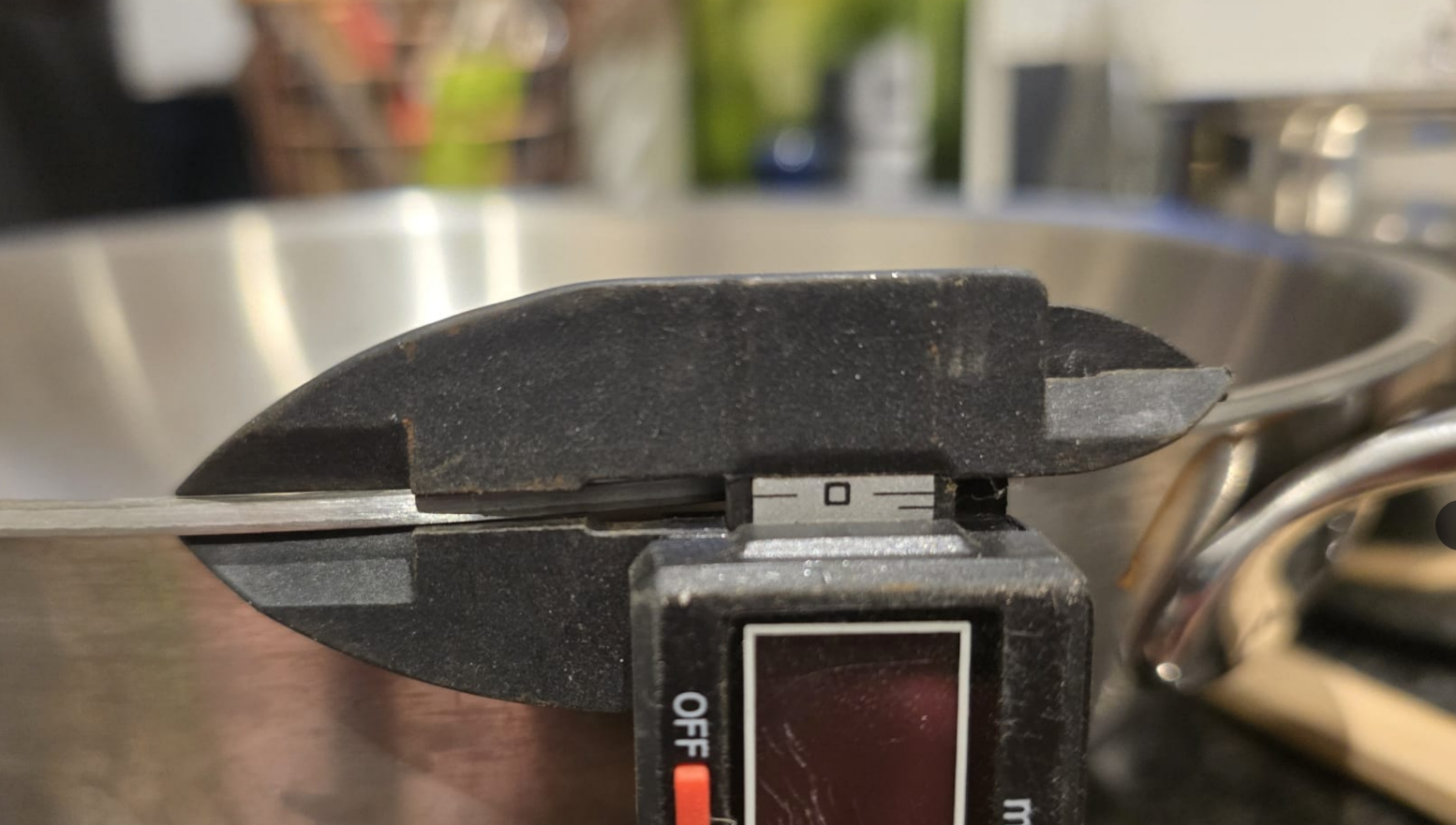
John Lewis five-ply thermacore: Clearly much thinner barely over 2mm, this surprised me as it weighs a lot!
Handle Comparison
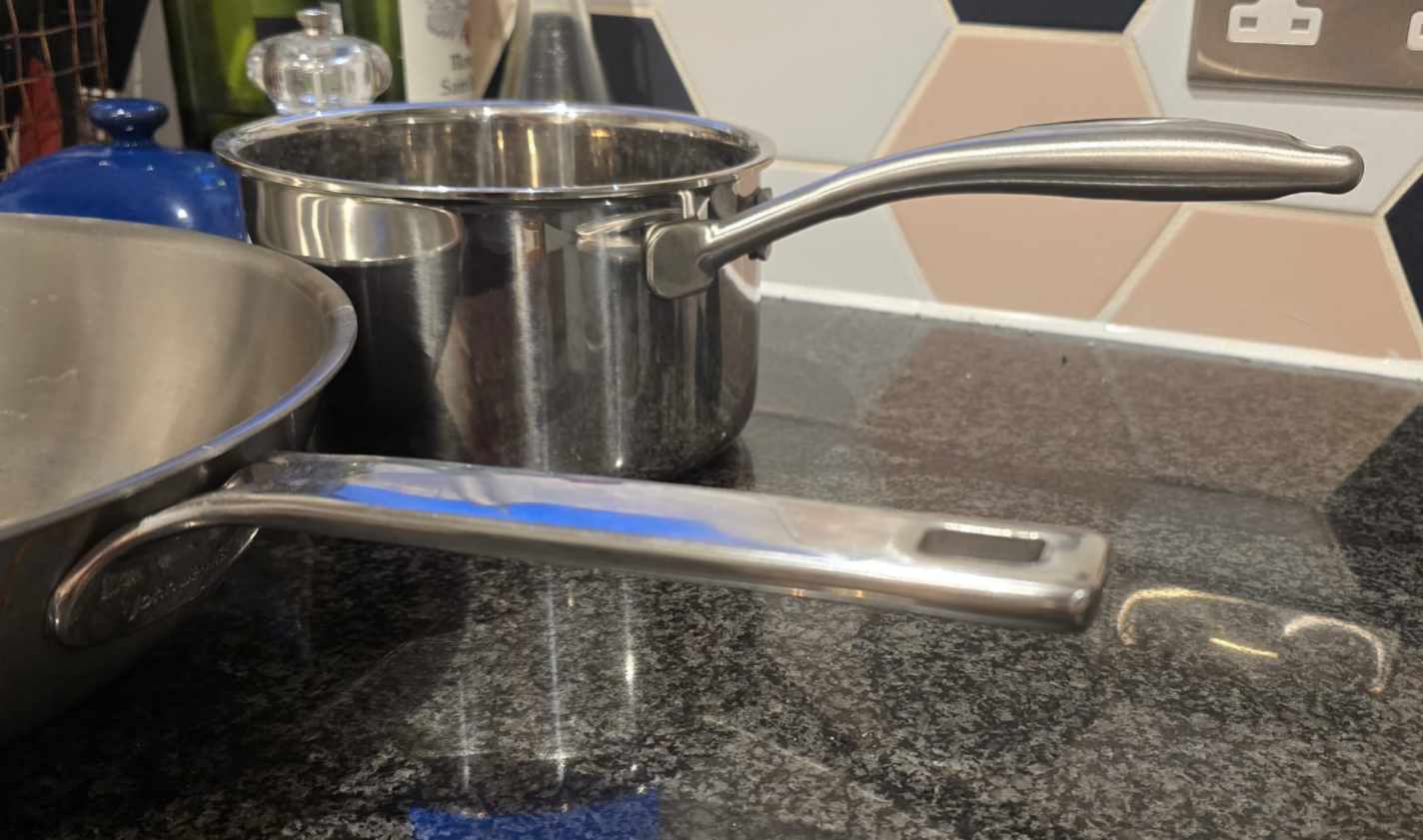
As you can see the John Lewis handle is much flatter and more angular, you wouldn’t think this would make a big difference, but I find it does.
Top down view to show length
Frequently Asked Questions
How do I get a ProCook discount code?
The simplest way is via a referral. Use my ProCook referral link, or type J Ewbank into the “Referred by a friend” field at checkout — both apply 15% off your first order.
Is ProCook Elite Tri-Ply worth it?
For me, yes. hey are sturdy, clean easily, and at around £40 per piece with the referral discount they are noticeably better-priced than John Lewis Thermacore at roughly £58 per saucepan. I expected that the insides would develop scratches over time, and they have (My girlfriend likes to stir with a fork). But that is why I bought stainless steel pans, because it doesn’t matter if they scratch. However, that is why the brushed steel of the Signature Elite-Tri-ply might be better
ProCook vs John Lewis Thermacore — which is better?
I own the ProCook saucepans and frying pans, plus a John Lewis Thermacore wok. The ProCook handles are far more comfortable — rounded and easy to grip — whereas the Thermacore wok handle is angular and digs into your hand. ProCook is also notably thicker (around 3mm vs roughly 2mm for the Thermacore five-ply). The Thermacore wok itself is excellent, but I’d choose ProCook for saucepans without hesitation.
Are ProCook Elite Tri-Ply pans dishwasher safe?
Yes, ProCook lists them as dishwasher safe, I only use the dishwasher and haven’t noticed any ill effects. One thing to note with stainless steel is that you shouldn’t wash it with aluminum as it can cause oxidation and rust of the stainless steel.
How thick is ProCook Elite Tri-Ply?
Around 3mm based on my own measurement of the base. The John Lewis Thermacore five-ply, by comparison, is barely over 2mm despite.
Do I need tri-ply saucepans?
Honestly, probably not for boiling and simmering, a decent encapsulated-base saucepan does most of what tri-ply does. Where tri-ply genuinely matters is frying pans, where even heat distribution across the sides changes how food cooks.
