In short
Verdict: Yes, I’d recommend the ProCook Professional Ice Cream Maker, with a few caveats. It makes very good ice cream, is much more convenient than a freezer-bowl machine, and I think it is reasonable value compared with other compressor ice cream makers. That said, I am not a connoisseur of ice cream makers and I have not used compressor models from other brands. Some of the other ice cream makers have the paddle in built into the bowl, which makes cleaning more difficult, this top mounted paddle makes cleaning and getting out all the ice cream easy.
Rating: 4 out of 5.
Best for: People who want to make proper homemade ice cream without keeping a freezing bowl in the freezer.
Watch out for: The machine churns and chills the mixture, but it does not produce fully hardened, ice cream, it’s more soft scoop straight away. I measured the temperature and it was around -14 degrees, so it does get cold!. But really you still need to transfer the ice cream to the freezer for a few hours.
Biggest lesson: Homemade ice cream is not just about the machine. Sugar, fat, golden syrup, alcohol, and mix-ins all make a big difference to the final texture.
Get 15% off: use my referral link, or just type “J Ewbank” into the “Referred by a friend” field at checkout.
Why I bought it
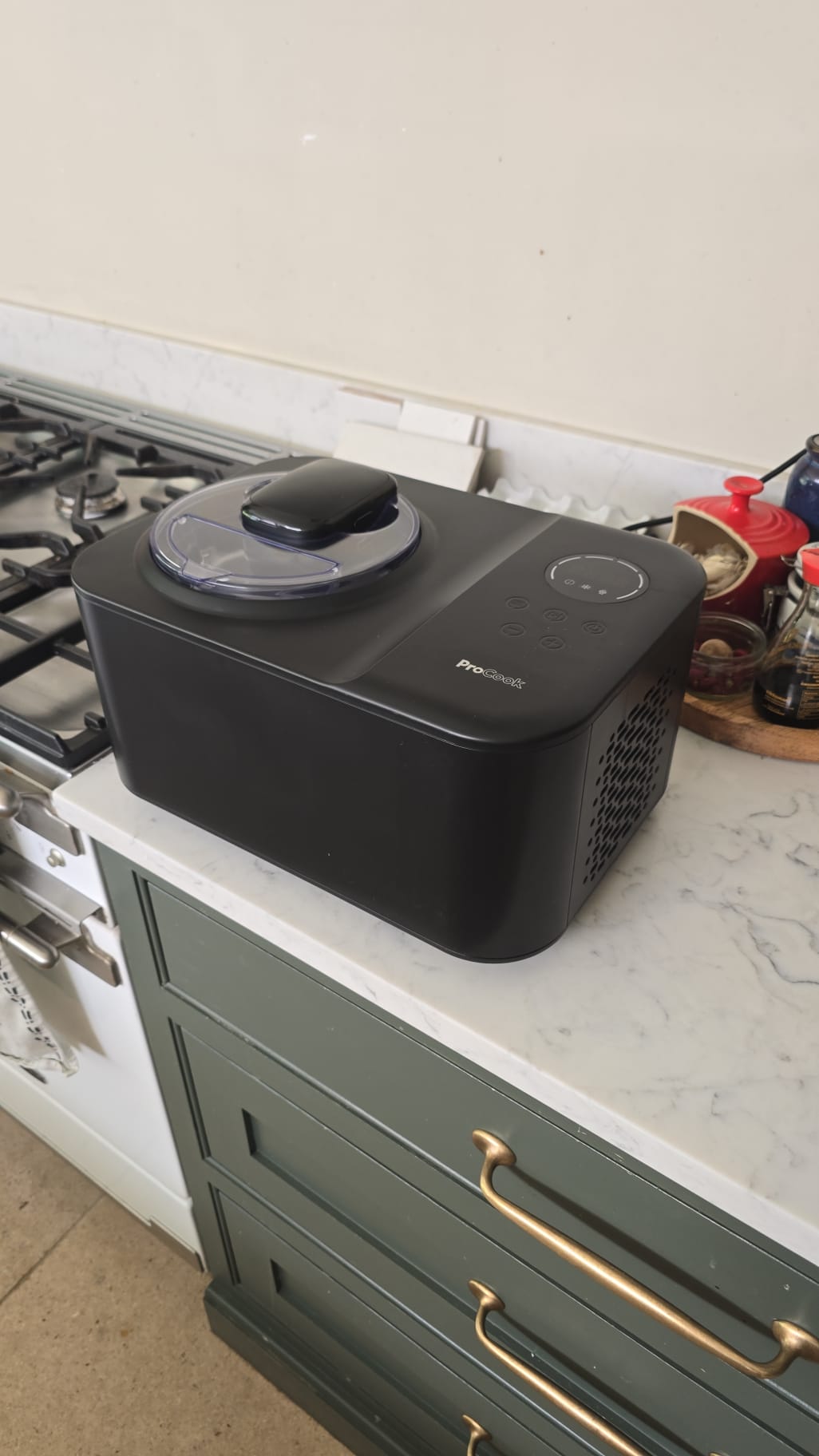
I bought the ProCook Professional Ice Cream Maker after previously using a small ice cream maker with a freezable bowl. That style of machine works, but I found it annoying. The bowl takes up a lot of freezer space, needs to be frozen well in advance, and in my experience never cooled the mixture especially well.
There is also the faff of having to rush when making mixes, which takes some of the fun out of making ice cream. If the bowl is only just cold enough, or the mixture is not chilled enough, or you take too long getting everything ready, the whole process feels a bit more stressful than it should.
The ProCook machine has a built-in compressor, which means it freezes itself while it churns. That was the main appeal. I wanted something I could use without having to sacrifice a large chunk of freezer space every time I fancied making ice cream.
The other reason we bought it was simply that it sounded fun. Shop-bought ice cream also seems to have become increasingly disappointing. A lot of it is full of gums, syrups, vegetable oils, or simply is not quite the proper ice cream you imagine it to be.
Making it yourself means you know exactly what has gone into it. If you compare it with higher-end supermarket ice cream, it can also work out cheaper. Premium brands are now often sold in 500ml tubs costing around £6. For around £3, we can make roughly 1200ml of ice cream with this machine.
First impressions
First impressions were mostly positive. The main unit feels reasonably well made and has a decent weight to it, which is reassuring. It does not feel like a cheap novelty appliance, although it is still very much a domestic ice cream maker rather than some kind of commercial machine.
One slightly odd thing was that mine came with no instructions at all. It is not a complicated machine, so this was not a disaster, but it did mean there was a bit of guesswork involved at first.
The internal bowl appears to be aluminium, which makes sense. Aluminium is a very good conductor of heat, so it should transfer the cold from the compressor to the ice cream mixture more efficiently than stainless steel would. It does not feel luxurious, but it does seem practical.
The weakest-looking part is the mixing paddle. It is made from fairly thin plastic and does not feel especially premium. That said, I do not think it is likely to break easily in normal use, partly because the motor is not especially powerful.
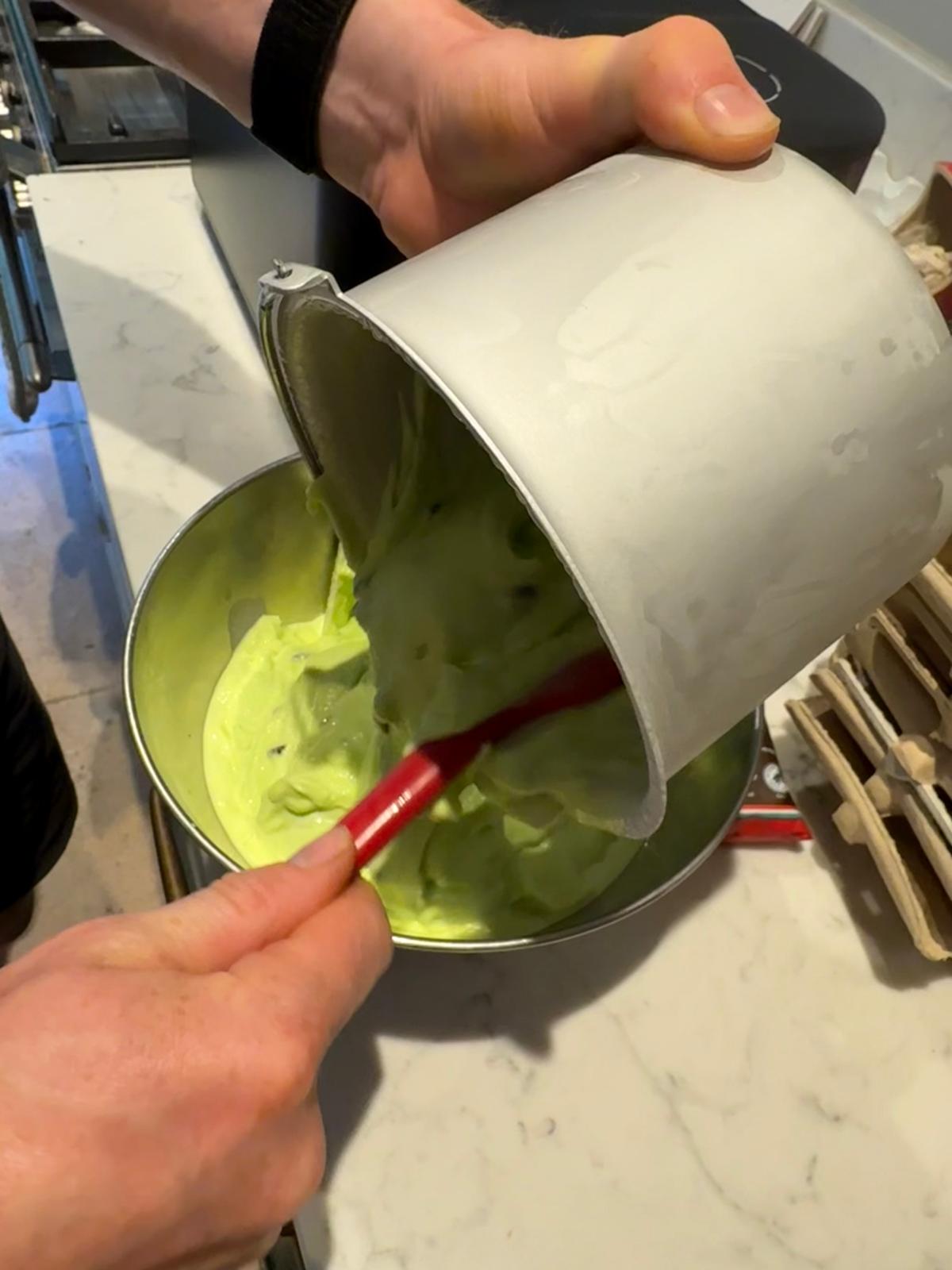
When the mixture gets too thick, the machine seems to stop churning rather than forcing the paddle through it. In practice, that is probably a good thing. I would rather the motor cut out than the paddle snap. It is at that point when you decant the mixture into a bowl and put it in the freezer.
How well does it work?
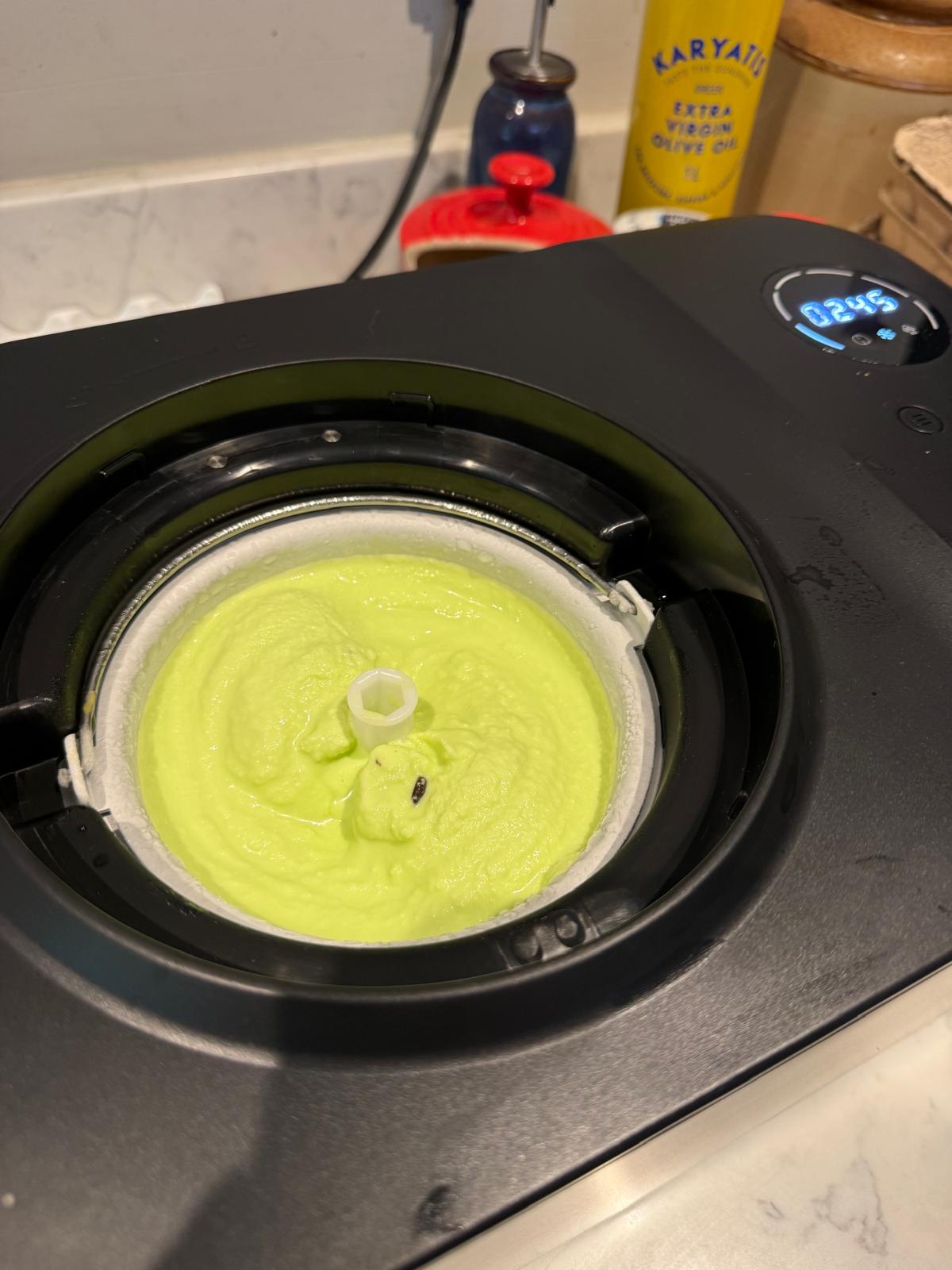
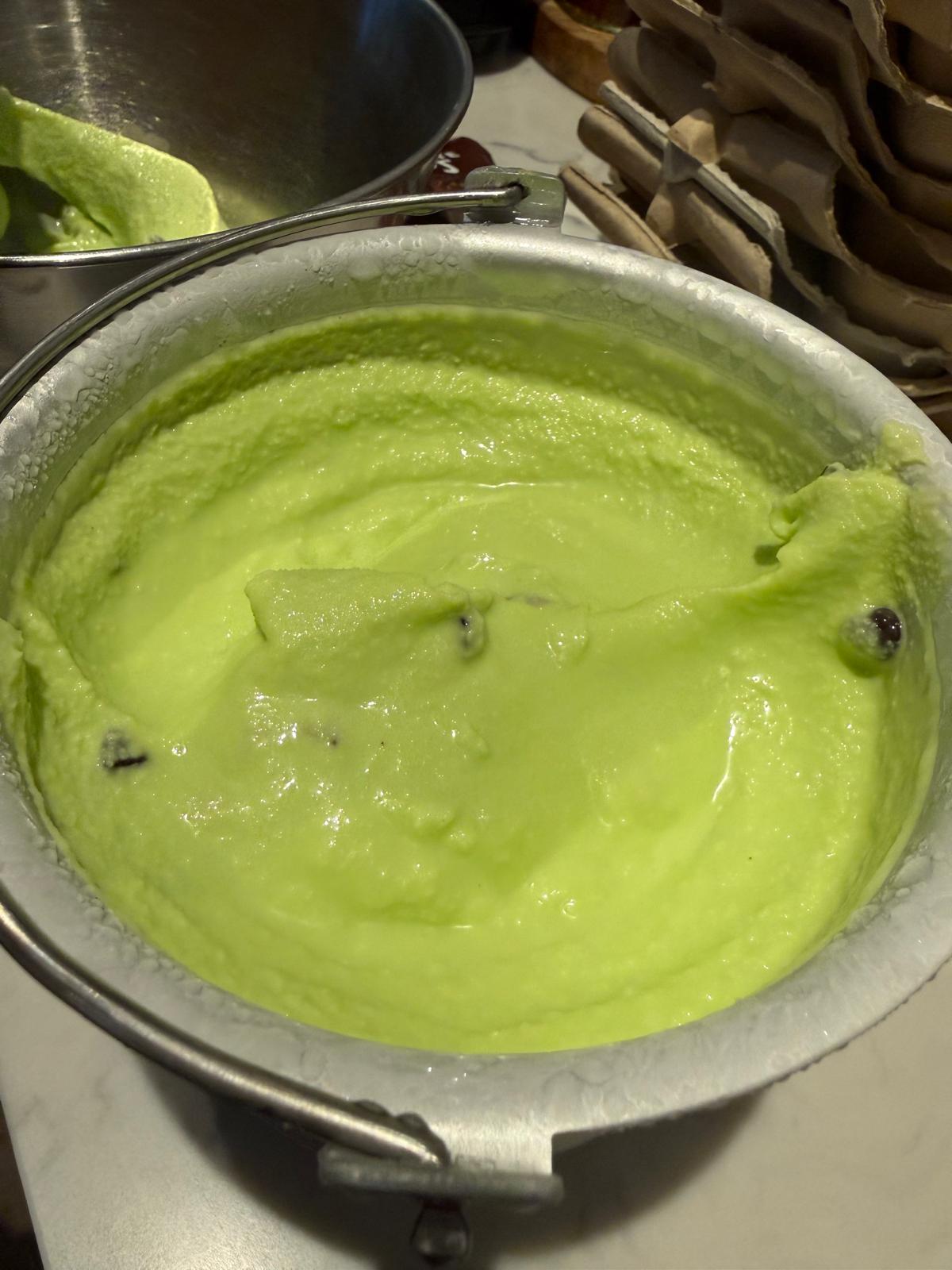
The important thing to understand is that this machine churns and chills the ice cream mixture, but it does not turn it into fully hardened freezer-style ice cream straight away. When the churn finishes, the texture is closer to a very soft soft-serve. It is cold, and developing thickness, but it isn’t cold enough to maintain structure straight away. It will start melting very quickly.
I had assumed that because the machine had a built-in compressor, the ice cream would come out more or less ready to scoop. In reality, the compressor makes the process much more convenient than a freezer-bowl machine, but it does not remove the need for final freezing.
What I made with it
So far, we have used the ProCook ice cream maker for proper ice cream and frozen cocktails. Some attempts worked brilliantly straight away; others taught me a lot about what actually affects homemade ice cream texture.
Mint chocolate chip ice cream
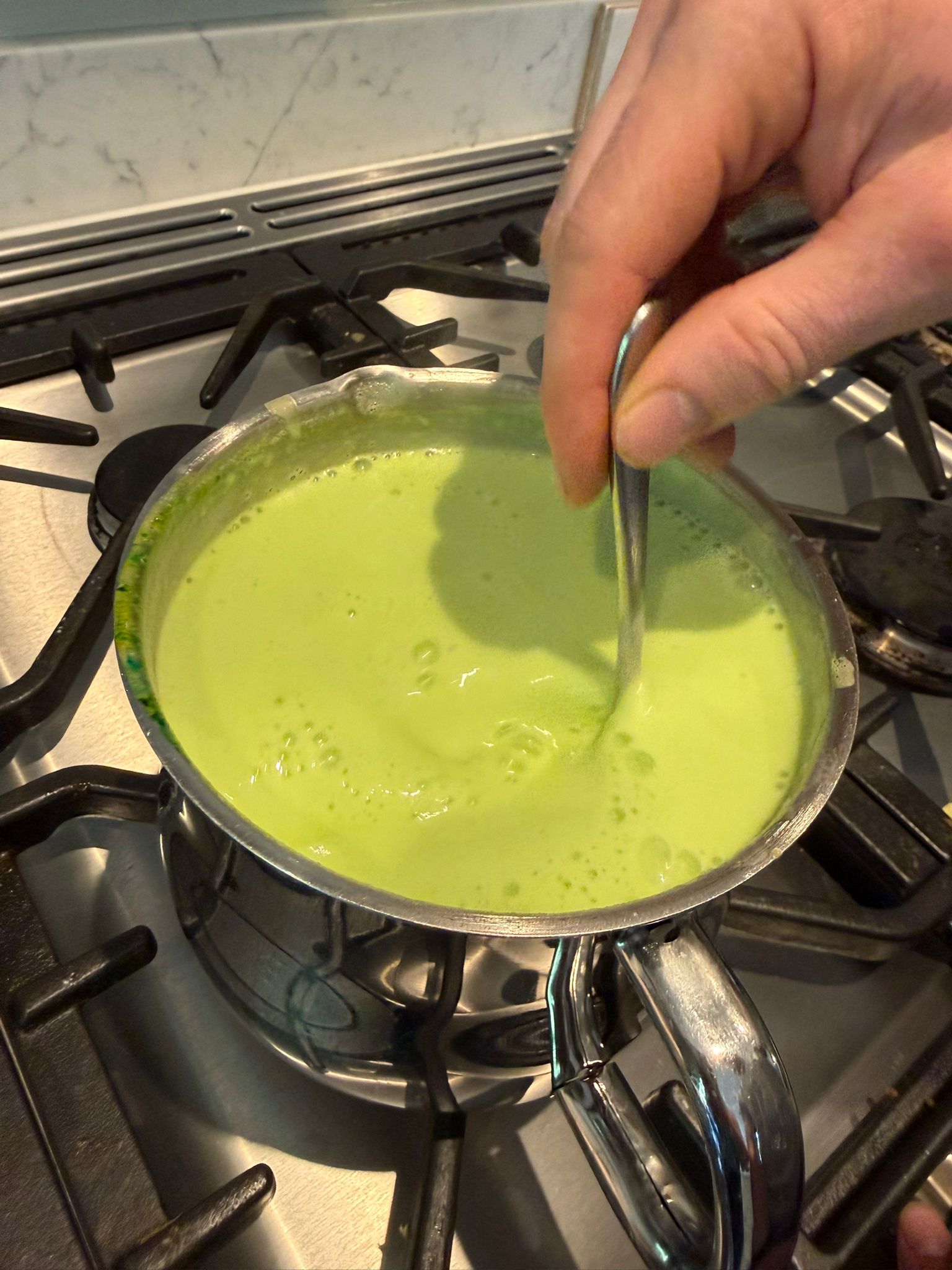
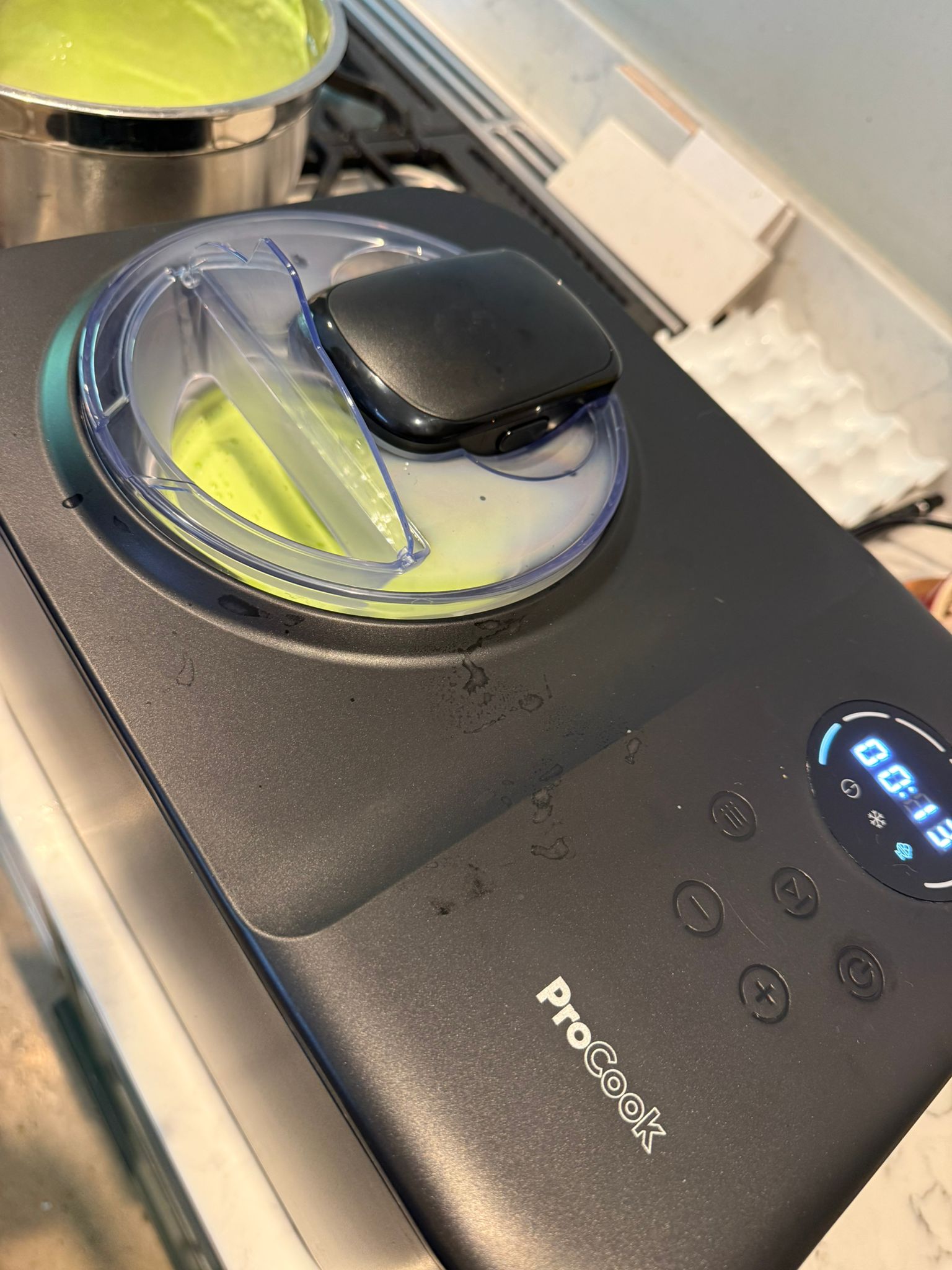
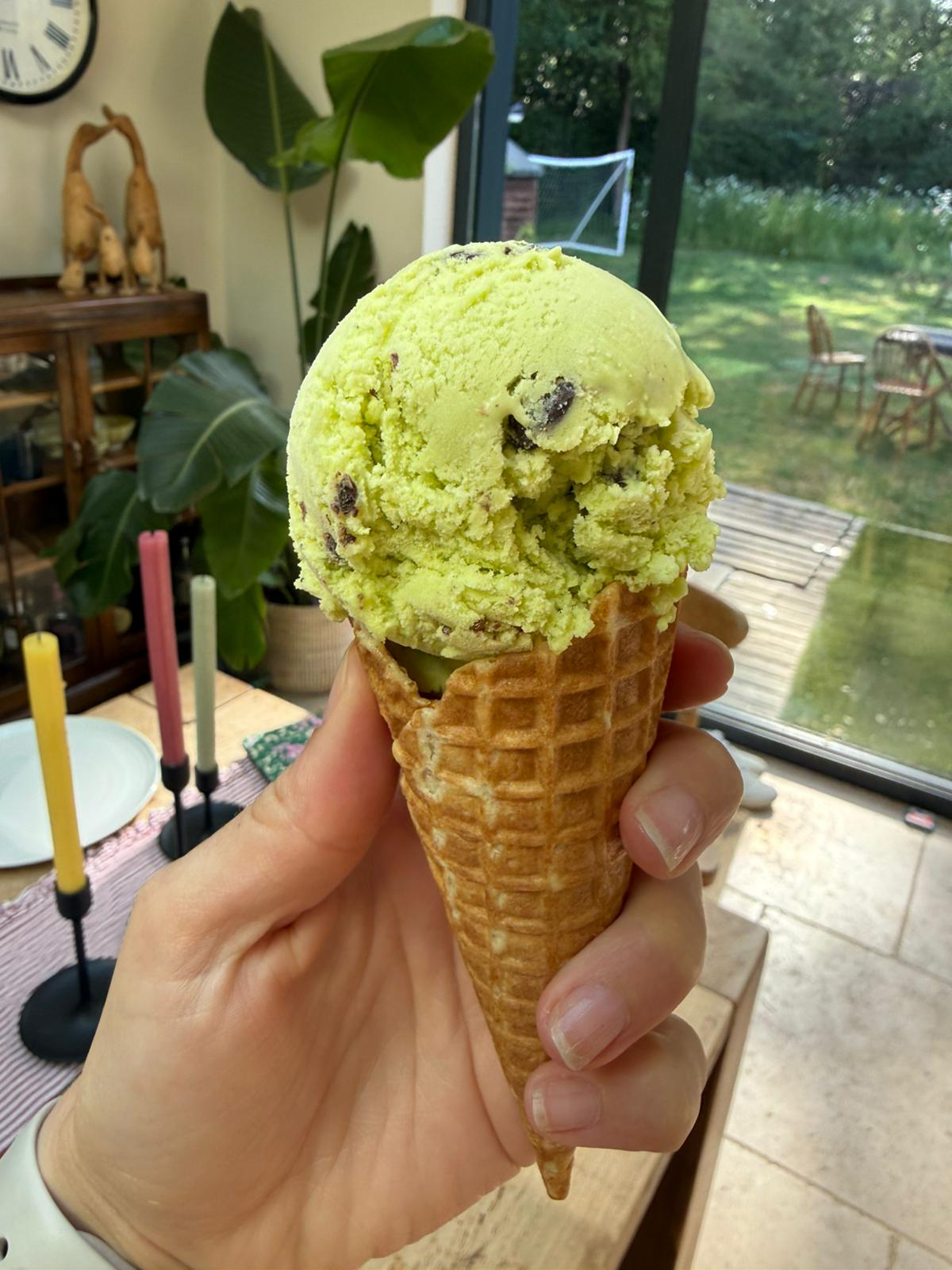
The first ice cream we made was mint chocolate chip, and it was excellent. This was the point where the machine started to feel worth having. The texture after churning was thick, cold, and smooth, and after a few hours in the freezer it became proper scoopable ice cream.
The main lesson from this first batch was that recipes matter a lot. We followed an American recipe and it was incredibly sweet. That is not necessarily the machine’s fault — sugar plays an important role in ice cream because it helps keep it softer — but it did make me realise that I would need to adapt recipes rather than just follow them blindly.
This is one of the fun things about making ice cream yourself. You can control the ingredients, but that also means you need to learn what the ingredients are doing.
Frozen cocktails
We also tried using it for frozen cocktails, including frozen margaritas and daiquiris. This worked better than I expected.
The advantage over simply shaking a cocktail with ice is that you can control the amount of water much more precisely. With a normal shaken cocktail, dilution depends on how much ice you use, how long you shake it, and how cold everything is. With the ice cream maker, you can decide exactly how much water goes into the recipe, then let the machine chill and churn it.
The results were good. I am not sure I enjoy frozen cocktails more than normal cocktails, but they are fun and I will definitely make more of them. It also makes the machine feel a bit more versatile than just being an ice cream maker.
Peanut butter and Reese’s ice cream
The peanut butter ice cream was the most interesting experiment, because it went wrong before it went right.
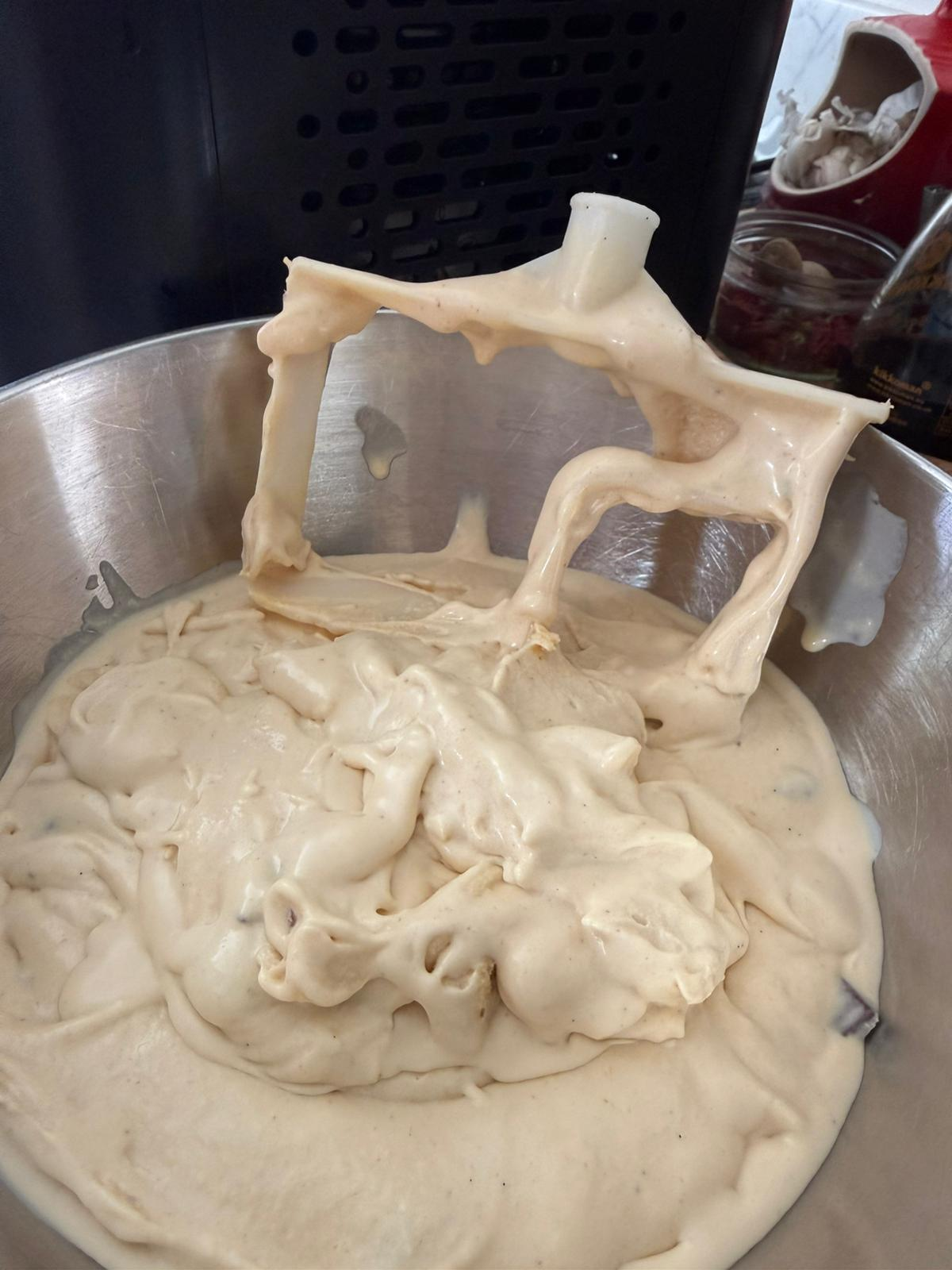
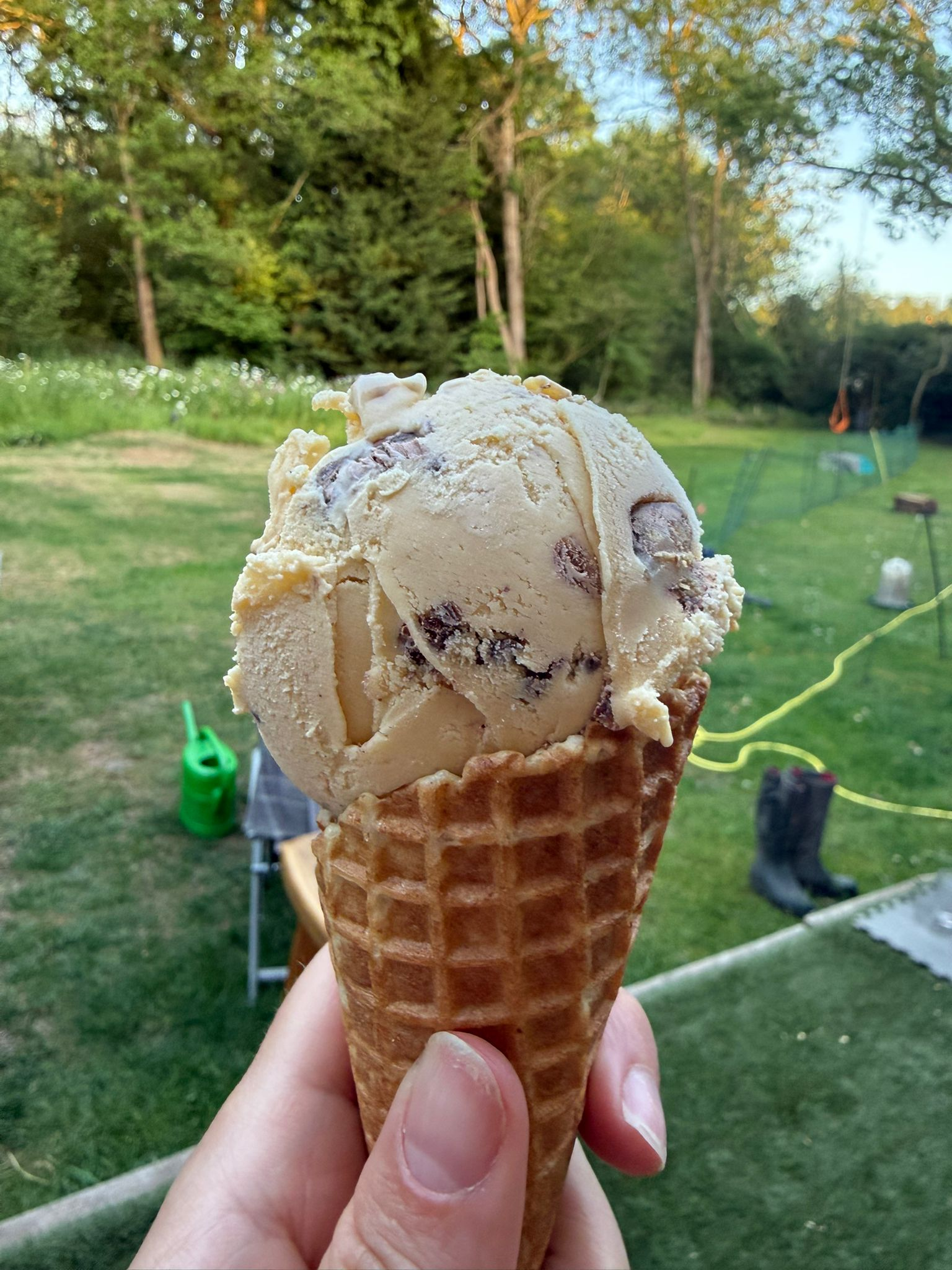
I made a peanut butter ice cream and added lots of chunky Reese’s Pieces towards the end of the churn. The problem was that I had not used any golden syrup or alcohol in the original mix, so the ice cream became very thick before it had reached the texture I wanted.
Once the Reese’s Pieces went in, they added too much resistance and the paddle stopped turning.
After transferring it to the freezer, the ice cream came out very hard. It was not icy or full of crystals, just too solid. I think this was partly because peanut butter is very fatty, which changes the consistency, and partly because the recipe did not have enough ingredients to keep it soft.
To rescue it, I let it soften, then re-churned it with a shot of rum and around 65ml of golden syrup. After that, it was excellent.
This was probably the batch that taught me the most. The machine can churn and freeze the mixture, but it cannot fix a recipe that is badly balanced. If the mixture gets too thick, especially with chunky mix-ins, the paddle can stop. That is not necessarily a fault, but it is something to be aware of.
What I learned about making ice cream
The main thing I have learned is that homemade ice cream is not just about freezing cream and sugar. The machine matters, but the recipe matters just as much.
Sugar is not only there for sweetness. It also affects texture. The more sugar there is, the softer the ice cream tends to be. This partly explains why some recipes, especially American ones, can taste extremely sweet: they are trying to get a soft, scoopable texture as well as flavour.
One useful trick is replacing some of the sugar with golden syrup. In the UK, golden syrup is an easy way to add invert sugar, which helps make ice cream smoother and less rock-solid after freezing.
Alcohol has a similar softening effect because it lowers the freezing point. You do not need much. A small amount of rum, vodka, Cointreau, or another suitable spirit can help stop homemade ice cream becoming too hard. Obviously this depends on the flavour you are making.
Fat also matters. The peanut butter ice cream showed this clearly. It did not come out icy, but it did come out very firm. That made me realise that “hard” ice cream and “icy” ice cream are not the same problem.
Mix-ins also need a bit of care. Adding chocolate chips, sweets, biscuits, or chunky pieces towards the end of the churn is usually sensible, but if the ice cream is already very thick, large mix-ins can add too much resistance and stop the paddle.
Downsides
The biggest downside is that the ProCook Professional Ice Cream Maker does not produce fully hardened ice cream straight from the machine. It gets the mixture cold and thick, but you still need to transfer it to the freezer if you want proper scoopable ice cream.
The second downside is the paddle. It feels a bit flimsy compared with the rest of the machine. I do not currently think it is likely to break, because the motor seems to cut out before too much force builds up, but it is the part I would be least surprised to have trouble with in the future.
The lack of instructions was also annoying. The machine is simple enough to use, but for a product like this I would have expected at least some guidance on timings, maximum quantities, and what to do if the paddle stops.
Finally, there is a learning curve. This is not really a fault of the ProCook machine specifically, but it is worth knowing. If you want good homemade ice cream, you need to think about sugar, fat, alcohol, golden syrup, and mix-ins. The machine makes the process easier, but it does not remove the need to understand the basics.
Is it better than a freezer-bowl ice cream maker?
For me, yes. Absolutely.
The freezer-bowl style of ice cream maker is cheaper and can work, but I found it annoying enough that I did not really want to use it. Having to store the bowl in the freezer is inconvenient, and if the bowl is not properly frozen, or your mix is not cold enough, the results can be disappointing.
The ProCook machine is much more convenient. You can decide to make ice cream without planning a day in advance around whether a large bowl is taking up space in the freezer. That alone makes the machine much more usable.
It still does not make instant fully frozen ice cream, but it removes the most annoying part of the cheaper machines.
Would I recommend the ProCook Professional Ice Cream Maker?
Yes, I would recommend it, with caveats.
It seems well enough made, it is much more convenient than a freezer-bowl machine, and it has already made some excellent ice cream. The mint chocolate chip was genuinely delicious, the frozen cocktails were fun, and even the peanut butter ice cream experiment turned into something excellent once I understood what had gone wrong.
The main thing to know is that this is not a magic box where you pour in ingredients and automatically get perfect ice cream. You still need to understand the basics of homemade ice cream: sweetness, softness, fat, freezing point, and when to add mix-ins.
The paddle also feels like the weak point, and I would have preferred clearer instructions in the box.
But overall, I am pleased with it. It has made ice cream making much more convenient, and it has also made the process more enjoyable. If you like the idea of making proper ice cream at home, and you do not want to deal with a freezing bowl taking up half your freezer, I think the ProCook Professional Ice Cream Maker is worth considering.
For me, it is a 4 out of 5 it does the job it is made to do. But I have concerns the paddle may not last years.