
Introduction
When it comes to overheating homes there seem to be two schools of thought. The first is that we should use passive cooling — preventing heat from getting in. The second is that air conditioning is better and needed.
Being somewhat of an experimentalist, I thought I would test the passive side and see what kind of results it can deliver in hot weather. Below is a description of my actions, and whether it was a success.
Firstly, the maisonette flat I am in overheats. It has a very low heat loss around 2kW and is well insulated. Once the heat is in it doesn’t naturally flow out. This isn’t due to a lack of ventilation — there are windows on both sides of the house, which allow for a through-draft, and also rooflights which can be opened to allow heat to rise up and out of the building. Nevertheless, natural ventilation is not sufficient to cool the building. I cannot stress how useless natural ventilation is at cooling this flat.
With that in mind, I will outline the steps I have taken to see how effective passive cooling can be.
What I Did
1. Ceiling Fans
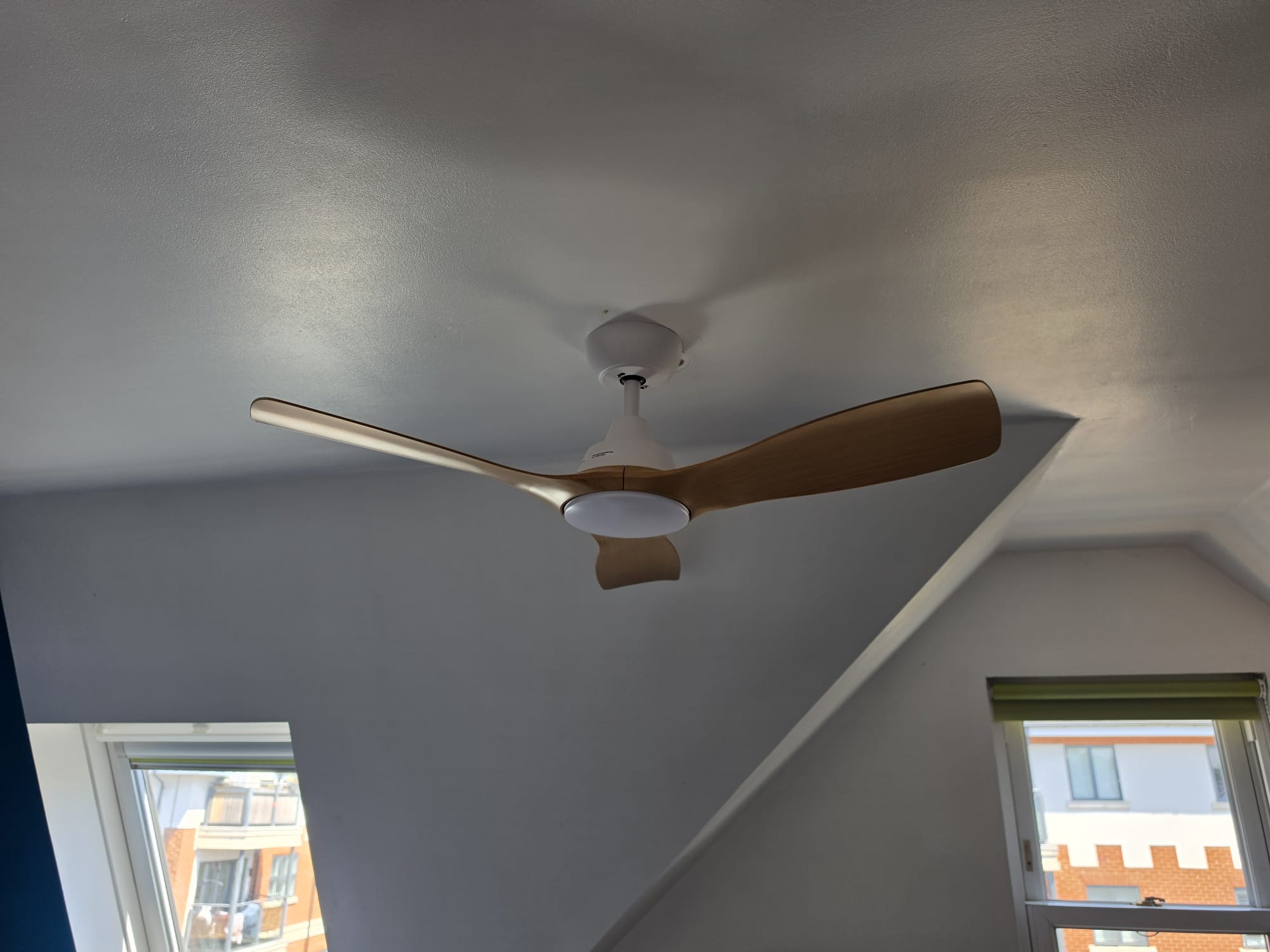
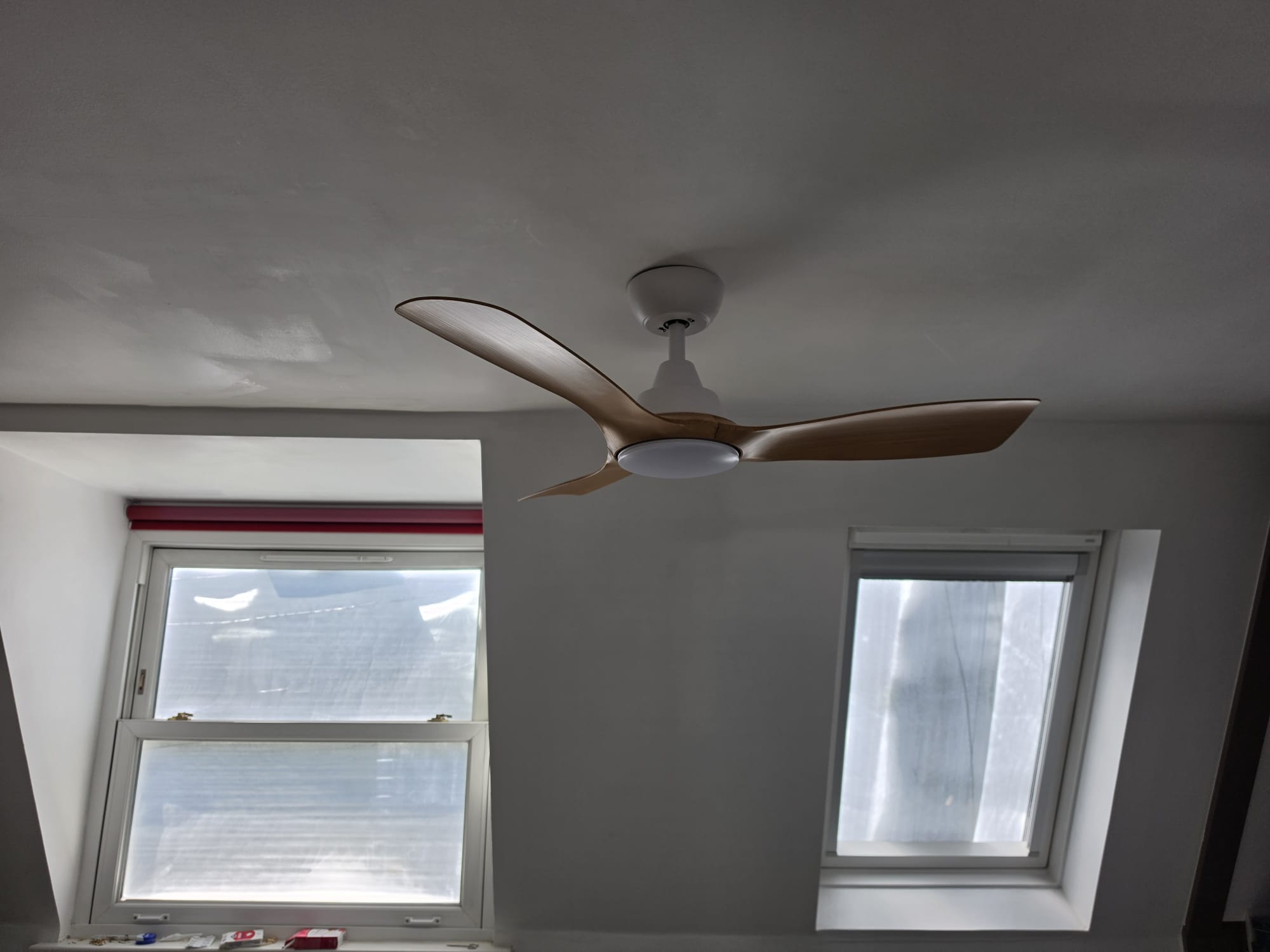
Both upstairs bedrooms now have ceiling fans. These have been a huge success — I’ll go into more detail later, but just by having a quiet, large fan circulating air, it’s much more comfortable to exist in a hotter room. Even if the temperature doesn’t fall significantly, you’re still able to fall asleep.
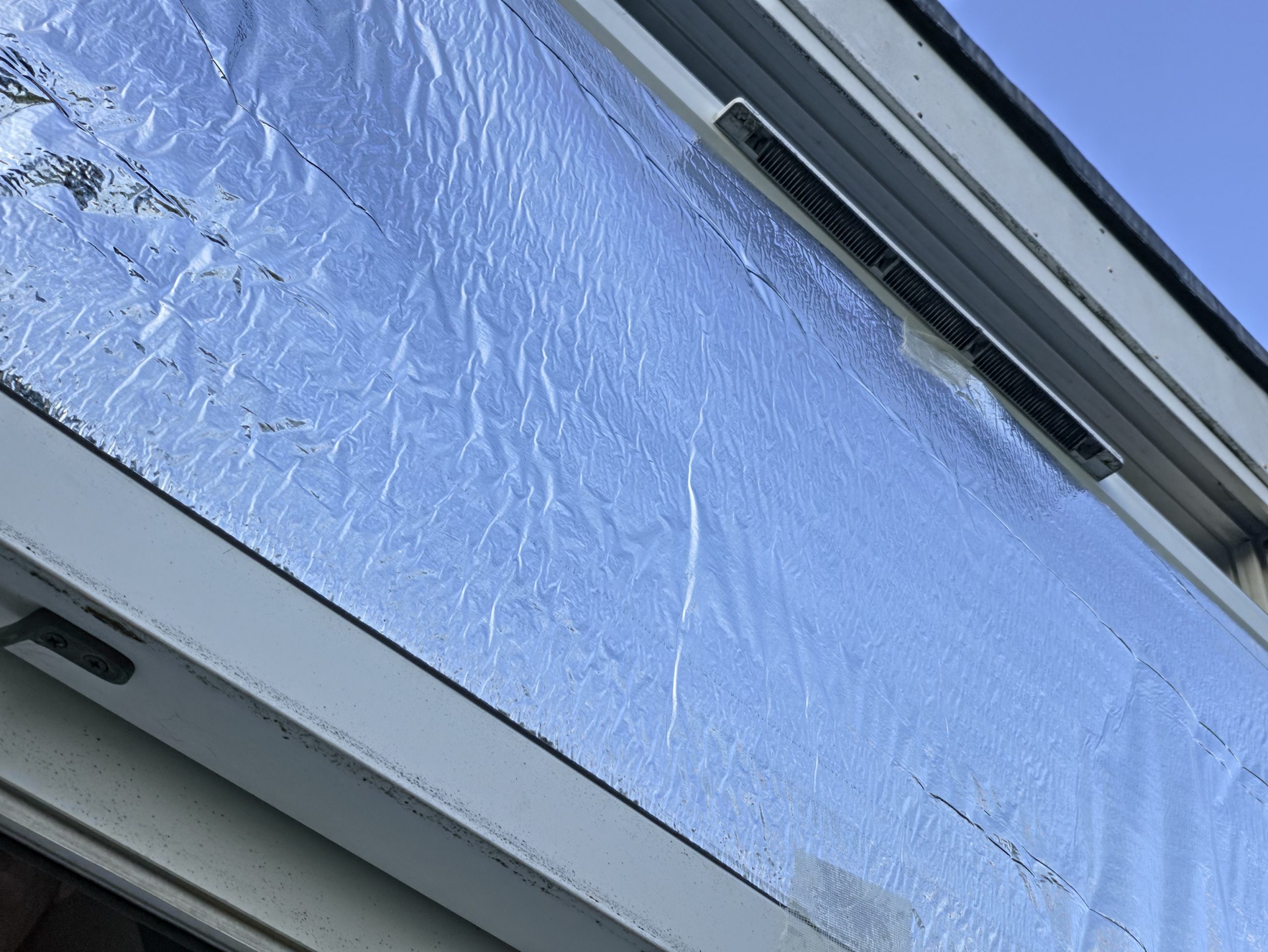
2. Radiator Foil on the Upstairs South-Facing Windows
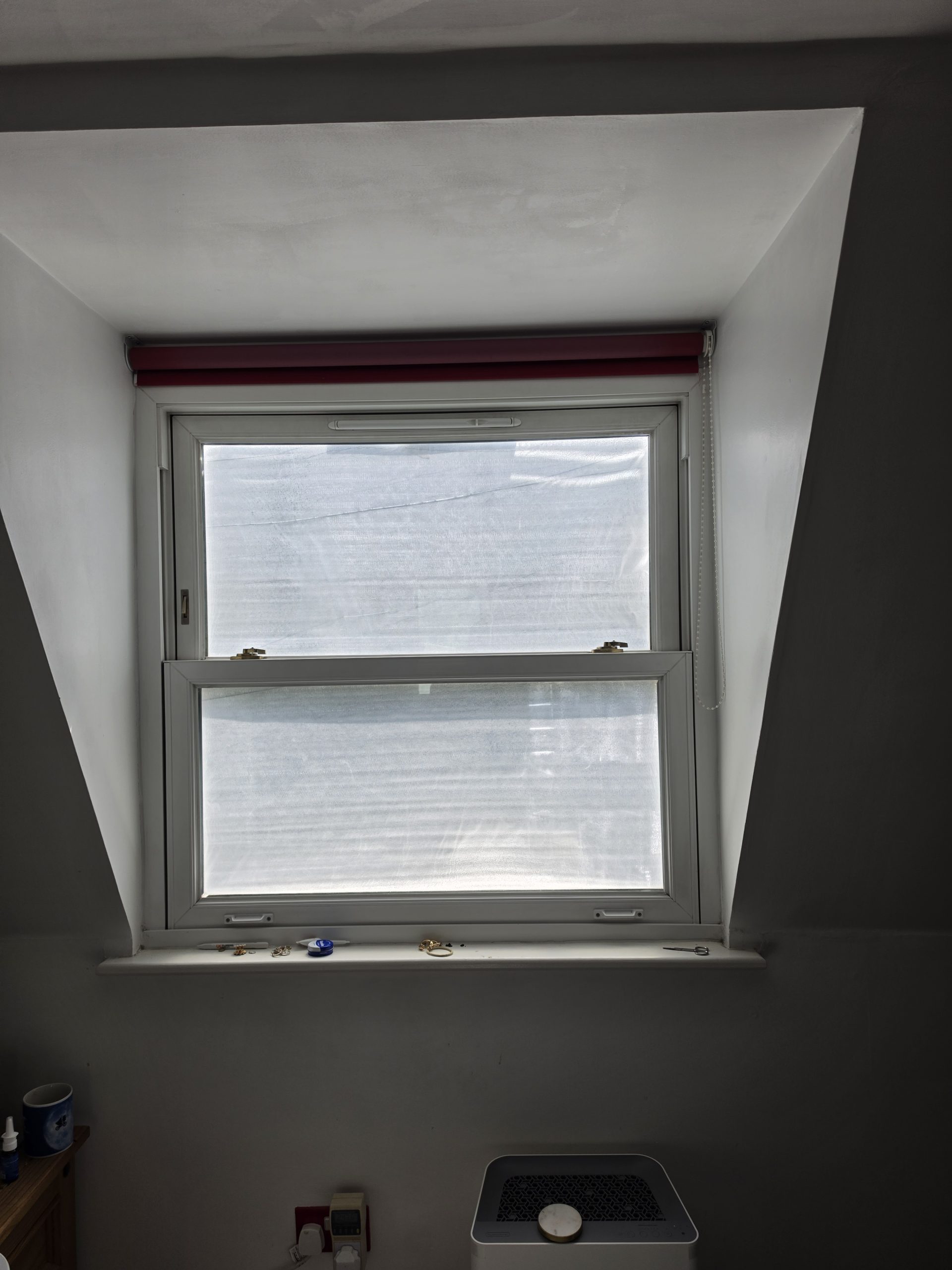
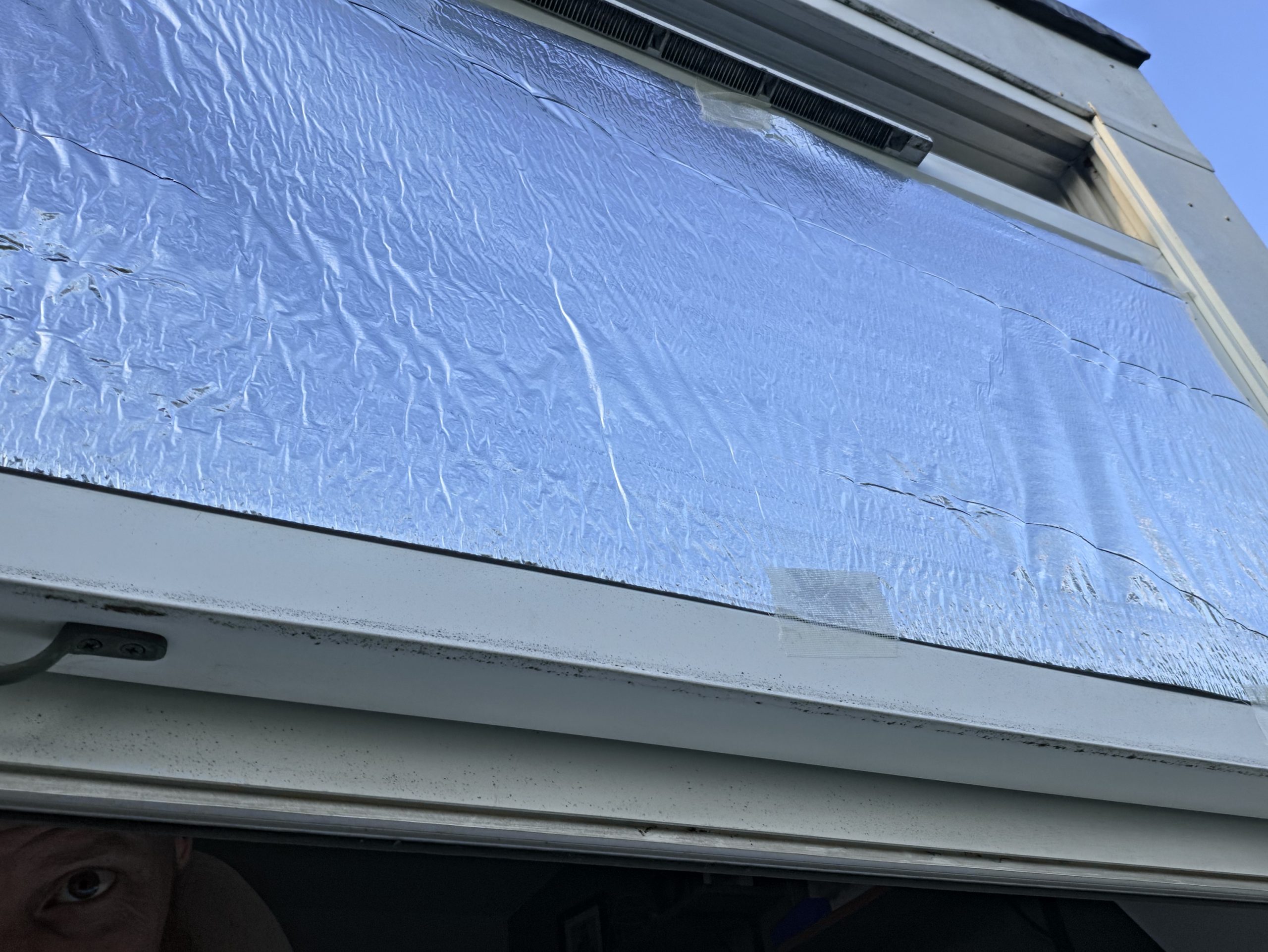
I iterated on this. I initially started using just sheets, then tried emergency blankets (which tore in the wind), and finally settled on radiator foil. This works; however, it is apparent that I’m fighting a losing battle against the heat. While I’m stopping the radiative heat getting in, it doesn’t stop the room getting hot, instead it reduces the sauna effect.
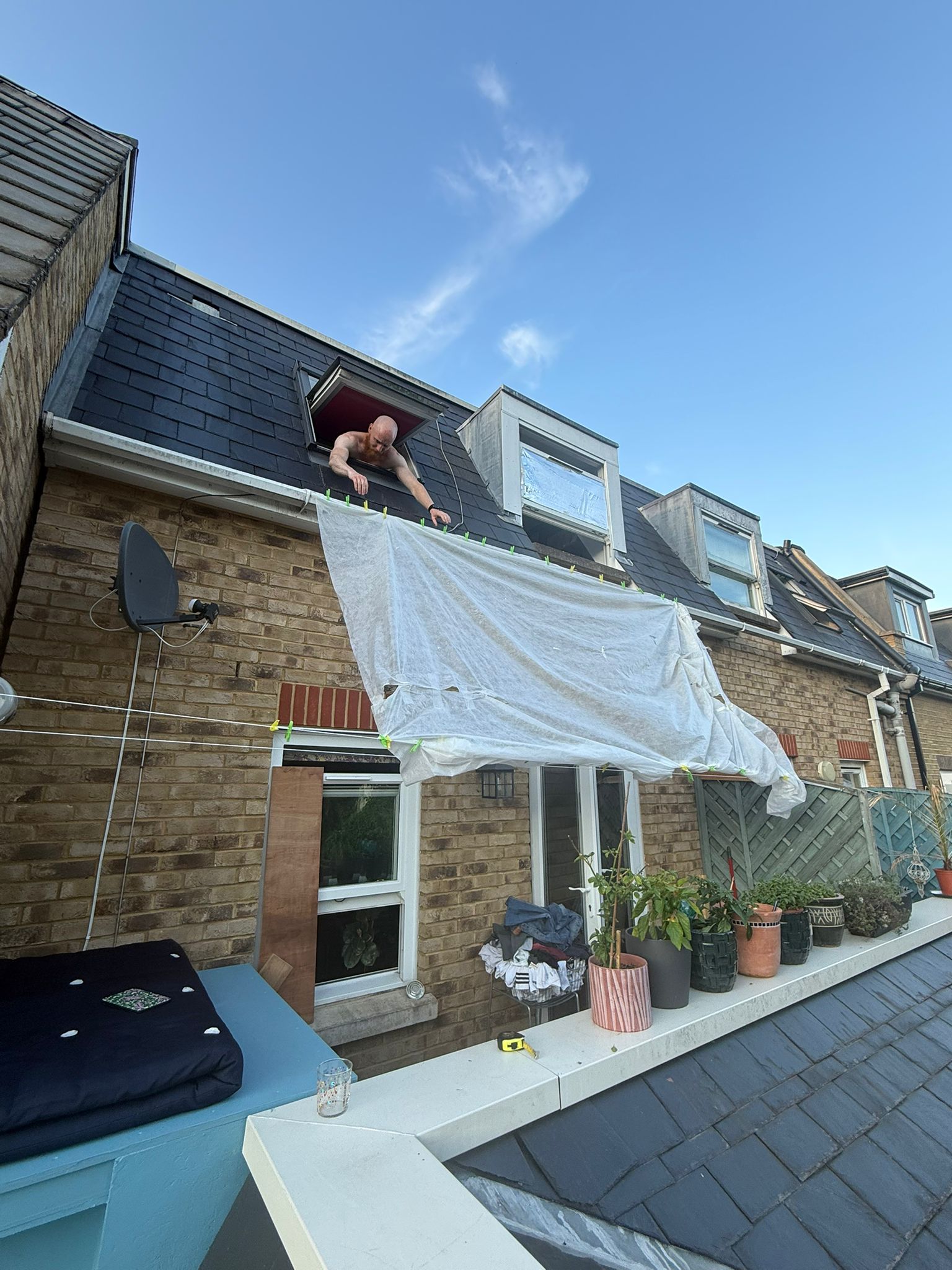
3. A Makeshift Awning Downstairs
This was more of an experiment than anything — trying to reduce the amount of heat that hits the bricks and gets absorbed. I can’t say how well it works, but it reduces solar gain to the balcony, so it does a little.
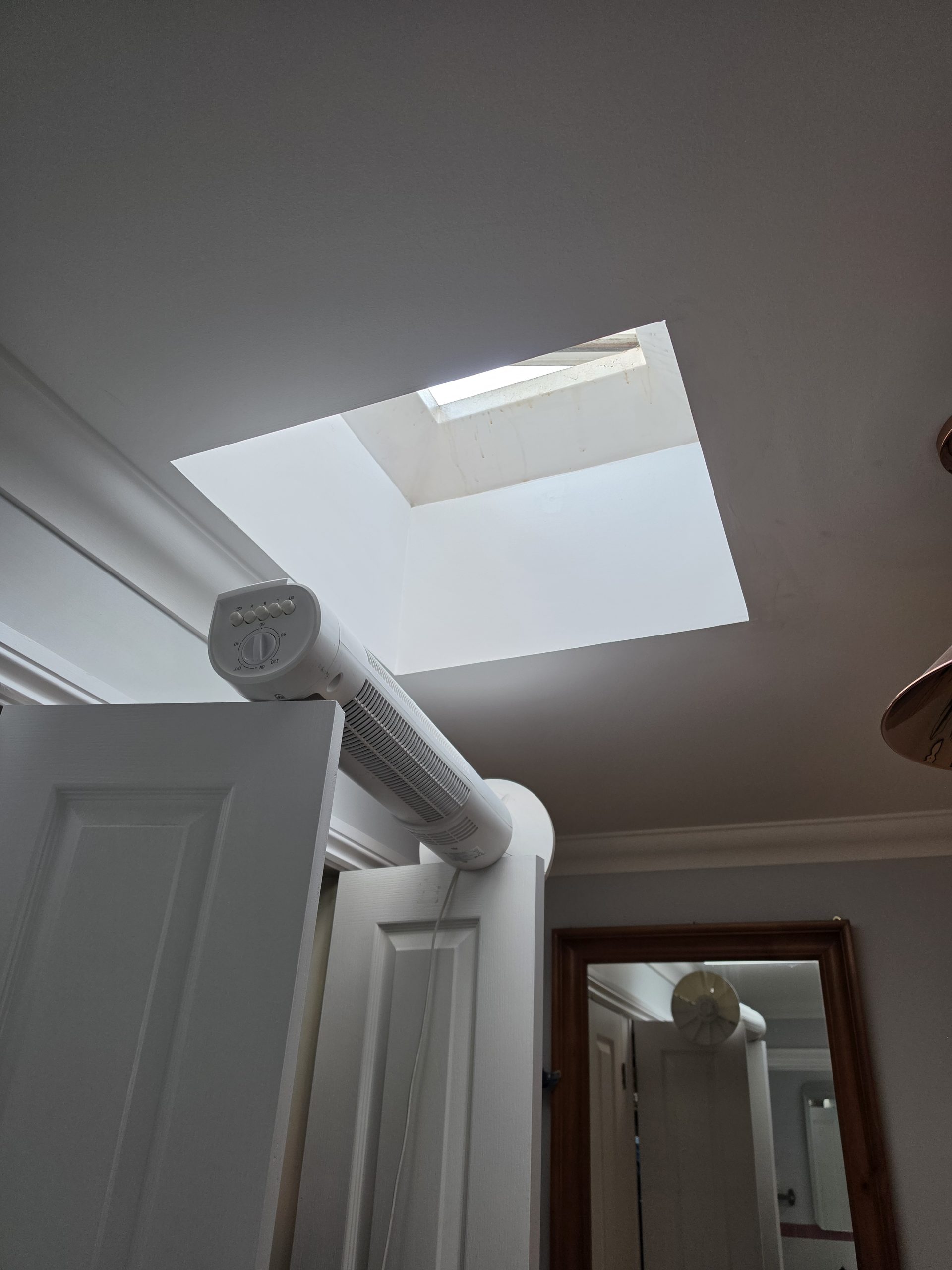
4. A Fan Blowing Air Out of the Rooflights
I noticed that with the rooflights open, there was still not a significant draw of air through the property. I realised that if I could blow air out of these rooflights, I could instead force convection in the property. This has worked to an extent — because we run the ceiling fans, there’s not so much stratification of heat across the room, so perhaps this isn’t quite as effective at pulling out the very hot air as it could be. But my goal is to overcome the lack of air flowing though the property and this helpscreates a draught. I’m tempted to get a bigger fan to do this, but in all honesty, I think it’s hit peak efficiency.
The Results So Far
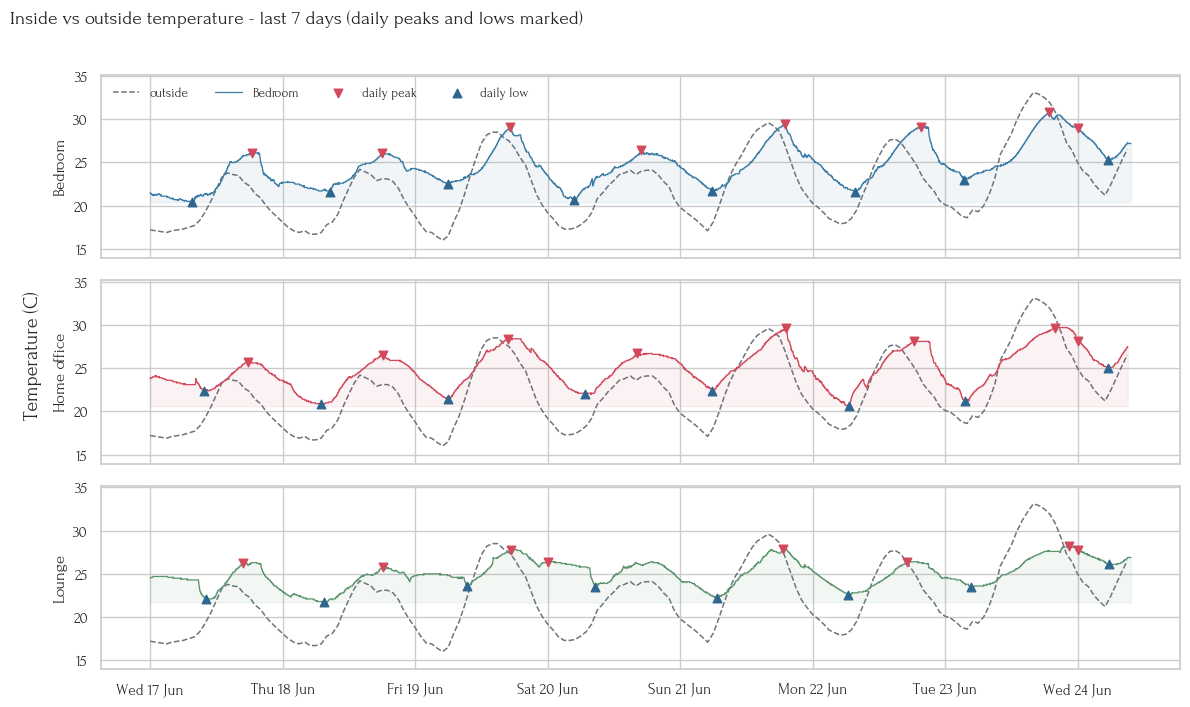
[ 7-day temperature chart — bedroom, home office, lounge, with external temperature from Open-Meteo as a dashed line]
The graph above shows temperatures over the last seven days. The top line is the bedroom, followed by the home office and the lounge. As you can see, the upstairs gets hotter than downstairs, with the bedroom the hottest overall. This is because it is south-facing and has rooflights.
The dashed line is the outside temperature from Open-Meteo. It reads a bit below what we experience locally, but we don’t currently have an external temperature logger.
All of these readings are with each of the interventions I mentioned previously in place. Each day we keep all the windows closed until the outside temperature falls below the inside. At that point, we ramp up the ceiling fans and open the rooflights.
If you look at the daily low temperatures over time, what you see is that despite our efforts, more and more heat is being retained each day. We are unable to equalise the external and internal temperatures. As the external temperatures increase, so do the internal temperatures. On the night of the 23rd–24th, the minimum bedroom temperature was over 25°C — far above what is comfortable in still air.
Despite it being that hot, we were able to sleep reasonably well because of the ceiling fan. It provides a nice breeze and is quiet. In previous years, before we had temperature monitoring, this room was stifling without it.
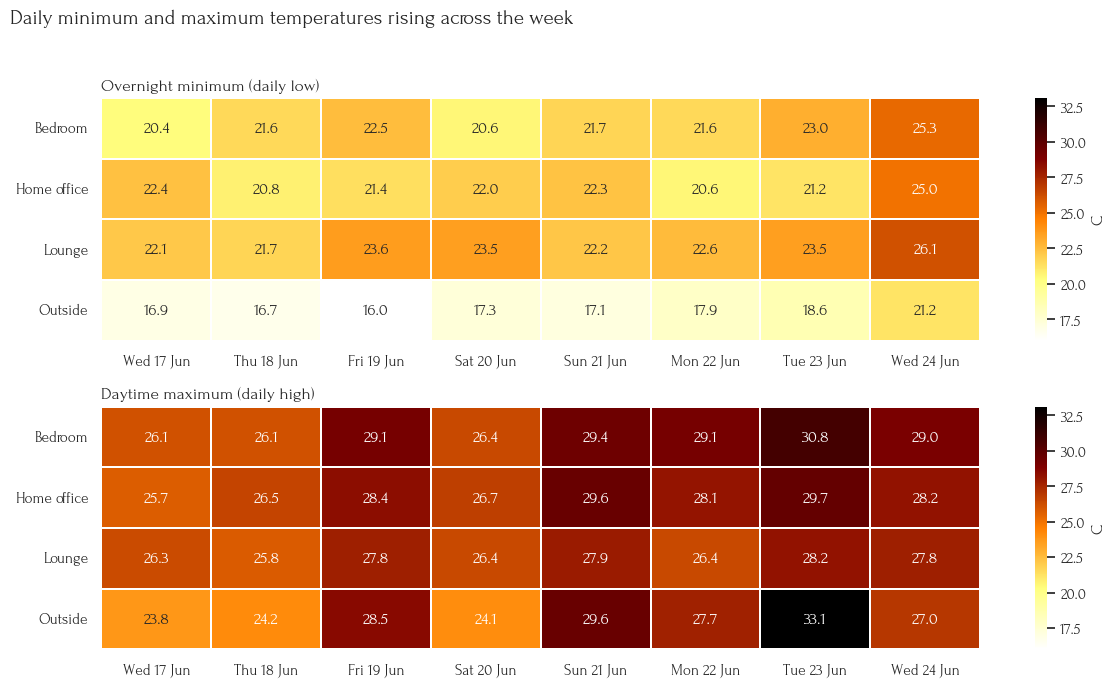
Going back to the temperatures — at what point does the temperature increase stop? If we have sustained hot weather for weeks and the nights don’t cool down, it becomes immediately obvious that passive measures are not sufficient to cool the property. This is a risk going forwards: if we continue to have hotter summers, internal temperatures will be largely set by the daytime peaks as the building’s thermal mass and surrounding buildings, roads, etc. store more heat.
The minimum temperatures of the home office and the bedroom have risen by 5°C over the past week, from 20°C to over 25°C. This isn’t even the end of the heatwave.
Ceiling fans make the biggest difference.
Adding the ceiling fans has had the greatest effect and comfort, just having the air move over your skin to help sweat evaporation makes a very hot room livable in. If you are in an area that isn’t prone to significant overheating and you want to take the edge off I’d go with these as a first step.
Passive measures won’t be good enough for cooling, in a warmer UK
these experiments are a bit hacky and temporary But I believe they demonstrate that passive measures are not going to be suitable for many UK homes, especially those in the South or with overheating issues.
That isn’t to say that you shouldn’t do passive measures, more that the physically reality is that if a room gets too hot then the outside temperature must be cooler than the room for the room to cool. If there isn’t the temperature drop off, then you can’t cool. It’s as simple as that.